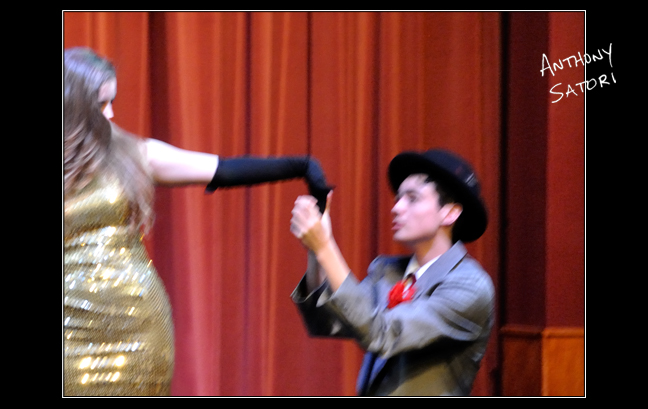
The Myth of the Rainy Night

“Piano Keys” | Anthony Satori

“I looked. George Shearing. And as always he leaned his blind head on his pale hand, all ears opened like the ears of an elephant. Then they urged him to get up and play. He did. Shearing began to play his chords; they rolled out of the piano in great rich showers, you’d think the man wouldn’t have time to line them up. They rolled and rolled like the sea. He played innumerable choruses with amazing chords that mounted higher and higher till the sweat splashed all over the piano and everybody listened in awe and fright. They led him off the stand after an hour. Shearing rose from the piano, dripping with sweat; these were his great days before he became cool and commercial. He went back to his dark corner, old God Shearing, and the boys said, ‘There ain’t nothing left after that.’ When he was gone, Dean pointed to the empty piano seat. ‘God’s empty chair,’ he said. God was gone; it was the silence of his departure. It was a rainy night. It was the myth of the rainy night.”

– Jack Kerouac

This text is my own compilation of two entirely separate accounts that Jack Kerouac wrote describing a single rainy night when he and “Dean” (Neal Cassady) watched George Shearing play piano at a jazz club. The more I combed through each of the two descriptions, the more I found them to be almost perfectly complimentary to each other. Eventually, it even started to seem as if Kerouac had deliberately structured them this way: consistently presenting certain elements of the experience in one description that he had left out of (or shaded differently in) the other, and vice versa. Being an avid appreciator of Kerouac’s descriptive writing, I became curious to see how the text would feel if I synthesized these two descriptions into one continuous narrative. It started as a creative exercise, but as I proceeded, it almost began to feel as if Jack had quite purposefully left this puzzle to be found and deciphered later by some especially attentive (and lucky) reader, and that I had by pure good fortune stumbled upon this riddle. Whether he did it on purpose or not, I do not know. But the combined story ended up coming together in such a compelling manner, I decided to share it with you here. I hope you enjoy!

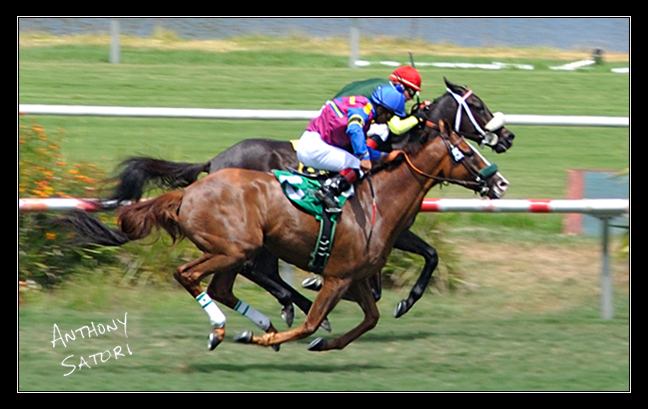
A Day at the Races

“A Day at the Races” | Anthony Satori

“I hadn’t played the horses in years and was bemused with all the new names. There was one horse called Big Pop that sent me into a temporary trance thinking of my father, who used to play the horses with me. I was just about to mention it to Old Bull Lee when he said, ‘Well I think I’ll try this Ebony Corsair here.’

Then I finally said it. ‘Big Pop reminds me of my father.’

He mused for just a second, his clear blue eyes fixed on mine hypnotically so that I couldn’t tell what he was thinking or where he was. Then he went over and bet on Ebony Corsair.

Big Pop won and paid fifty to one.

‘Damn!’ said Bull. ‘I should have known better, I’ve had experience with this before. Oh, when will we ever learn?’

‘What do you mean?’

‘Big Pop is what I mean. You had a vision, boy, a vision. Only damn fools pay no attention to visions. How do you know your father, who was an old horseplayer, just didn’t momentarily communicate to you that Big Pop was going to win the race? The name brought the feeling up in you, he took advantage of the name to communicate. That’s what I was thinking about when you mentioned it.’

In the car as we drove back to his old house he said, ‘Mankind will someday realize that we are actually in contact with the other world, whatever it is.’”

– Jack Kerouac

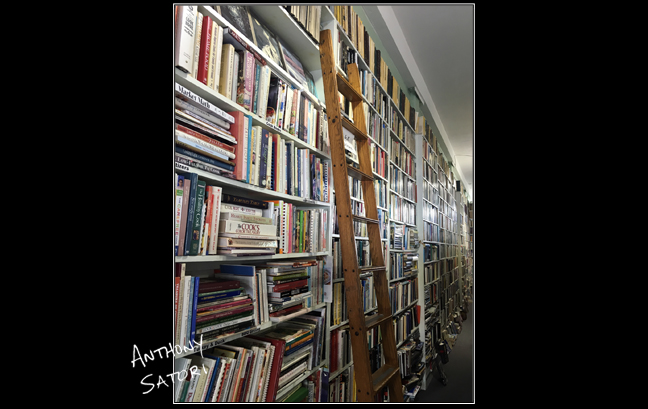
The Stacks

blogimage-satoricircledotcom-march-11-2017

“The Stacks”  |  Anthony Satori

“The page is long, blank, and full of truth.  When I am through with it, it shall probably be long, full, and empty with words.” 

— Jack Kerouac

In That Silence

blogimage-satoricircledotcom-december-3-2016b

“In That Silence” (triptych) |  Anthony Satori

“To me a mountain is a buddha. Think of the patience, hundreds of thousands of years just sitting there being perfectly perfectly silent and praying for all living creatures in that silence.”

— Jack Kerouac

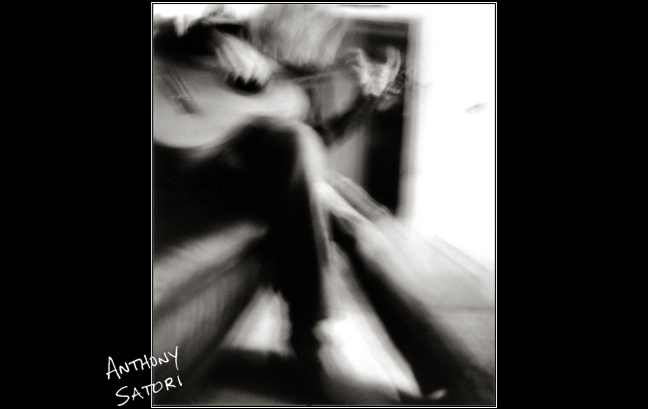
The Blue Centerlight

blogimage-satoricircledotcom-october-15-2016c

“Girl Playing Guitar by Firelight”  |  Anthony Satori

“The only people for me are the mad ones, the ones who are mad to live, mad to talk, mad to be saved, desirous of everything at the same time, the ones who burn, burn, burn like fabulous yellow roman candles exploding like spiders across the stars and in the middle you see the blue centerlight pop and everybody goes ‘Awww!'”

— Jack Kerouac

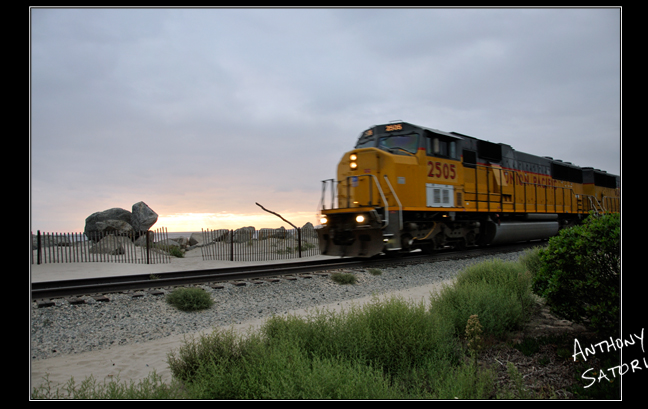
Locomotive

BlogImage - SatoriCircleDotCom - June 18 2016

“Locomotive”  |  Anthony Satori

“I walked on the banks of the tin-can banana dock and sat down under the huge shade of a Southern Pacific locomotive to look at the sunset over the box-house hills and cry.  Jack Kerouac sat beside me… companion… we thought the same thoughts of the soul… surrounded by the gnarled steel roots of the trees of machinery.”

— Alan Ginsberg

It is okay to feel sad, sometimes.  It is a normal and healthy part of life.  But don’t plan to stay there.  Be ready to move through it, like a locomotive.  Remember that sadness is not who you are.  You are Spirit.  You are Joy.  You are Light.  You were created to be the reflection and the conduit of everything that is Good in the Universe.  You were created to be the eyes, the ears, the pleasure, and the laughter of God.

BlogImage-footd2

By the Sigh of the Sea

BlogImage - SatoriCircleDotCom - May 14 2016

“By the Sigh of the Sea”  |  Anthony Satori

“Happy.  Just in my swim shorts, barefooted, wild-haired, in the red fire dark, singing, swigging wine, spinning, jumping, running—that’s the way to live… free, in the soft sands of the beach, by the sigh of the sea out there.”

— Jack Kerouac

Embrace life, every moment of it.  Immerse yourself in the wonder of it all.  Pursue the sublime, it is hiding behind every corner, and it desires nothing more than to be sought, found and inhaled by you.

BlogImage-footd

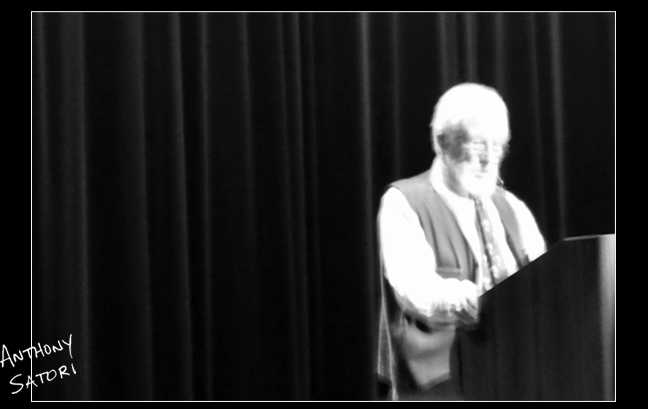
Gary Snyder, Zen Poet

“Gary Snyder,  Zen Poet”  |  Santa Barbara, California, 2015  |  Anthony Satori

“In the mountains, there you feel free.”

— T. S. Eliot

Campbell Hall, UCSB, California, November, 2015

It is an odd juxtaposition to watch a poet whose primary subject matter is nature, mountains and wilderness put on a tie, stand at a podium, and talk about his work in one of the least wilderness-like places conceivable: a university lecture hall.  You get the feeling of a creature out if his element, a proverbial fish-out-of-water… handling the environment with admirable aplomb, yet periodically, and involuntarily, gasping for air. 

The evening began strangely enough, with Snyder delivering a seemingly unprovoked 20-minute lecture on how we (the audience) were all inept at water conservation — although arguably from a place of authority, since he does live on a self-sustaining commune. 

This was followed (thankfully) by some enjoyable, yet seemingly random, readings of poetry from some of his more obscure collections (oddly excluding both the entire “Beat Generation” era and his most recent book release). 

The event then proceeded to attain new heights of awkwardness upon the introduction of an inexplicably antagonistic interviewer. To paraphrase a sample exchange:  Interviewer: “One farmer said that he grew the best oranges by looking at everyone around him and doing exactly the opposite of what they did.  Is this essentially what you are doing on the commune?”  Snyder: “No.  We’re not that dumb.”  Ouch. 

Almost regardless of venue, however, to hear a veritable institution of literature speak, read and discuss poetry and articulate his views on writing and life is a worthy experience.  Up until now, Gary Snyder has inhabited the status of an almost quasi-fictional Beat Poet/Zen Madman character to me, someone who existed only on the pages of Jack Kerouac novels and in my imagination.  Now, by virtue of this experience, his glowing apparition has been immortalized in my mind, and has, simultaneously, been made real.

BlogImage-footd

Tea and Infatuation

“Infatuation”  |  Anthony Satori

“The first sip is joy and the second is gladness, the third is serenity, the fourth is madness, the fifth is ecstasy.”

—  Gary Snyder, describing to Jack Kerouac an ancient philosophy of drinking tea.