“Simplify. Get rid of all that is unnecessary. Wabi-sabi means treading lightly on the planet and knowing how to appreciate whatever is encountered, no matter how trifling, whenever it is encountered. Wabi-sabi tells us to enjoy the unencumbered life. Obviously, leading the simple wabi-sabi life requires some effort and some will, and also some tough decisions. We still live in a world of things. But wabi-sabi is about the delicate balance between the pleasure we get from things and the pleasure we get from freedom from things.”
“A good traveler has no fixed plans, and is not intent on arriving.”
– Lao Tzu
This is true. A good traveler also knows the direction they wish to go, and they continue to seek ways to keep themselves moving in that direction, each day.
On the one hand, our Good Traveler knows that the journey is the destination, and so they strive to remain present and grateful, each step of the way. On the other hand, they are also mindful and conscious in their choice of the direction they wish to go, and they continue to pursue this good and worthy aim with enthusiasm, clarity, and drive.
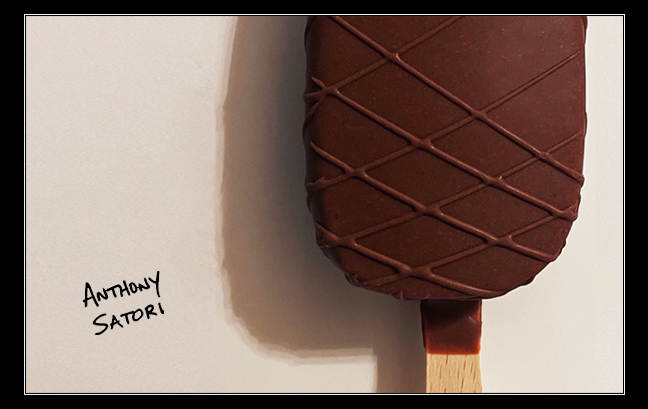
“Chocolate Covered Ice Cream Bar” | Anthony Satori
“Together with a culture of work, there must also be a culture of leisure as gratification. To put it another way: people who work must also take the time to relax, to be with their families, to enjoy themselves, to read, to listen to music, to play a sport.”
Compassion and strength are not mutually exclusive. In fact, they are not even at odds. True compassion is rooted in carefully cultivated principles, universal love, and clear-eyed reason. This highest version of compassion both informs and enhances strength by imbuing it with righteousness, clarity, and drive. True strength, in the same way, is rooted in wisdom, self-discipline, and courage. This highest version of strength empowers compassion by providing it with the peace and security it needs to perform at the highest levels of efficacy, humaneness, and virtue.
“Only one link in the chain of destiny can be handled at a time.”
— Winston Churchill
It is vitally important to make plans, to have goals, and to set things into place that will come to fruition at a future time. It is of real value to create a hopeful and abundant vision of the future, both distant and near, and then to strive to hold steadfastly to a course that will take you there. This is a vital skill, and it is a powerful tool for a successful life.
Even as this is being done, however, it is equally important to remember to keep returning to the present moment, and to ask yourself, “What can I do today? What is within my reach, right now, that will make my life, and the lives of those I love, better? What small step can I take, in this moment, that will take me further toward where I dream to be?”
It is crucial to keep the bigger picture in mind, every step of the way, just as it is essential to always hold your values and principles firmly in hand. One should also continually strive, however, to employ these elements to inform a fully engaged life in the present moment, and to live each day with mindfulness, gratitude and love.



 Satori Circle | Art & Culture