
“Wild Horses” | Anthony Satori
“Forget not that the earth delights to feel your bare feet and the winds long to play with your hair.”
– Khalil Gibran
“Wild Horses” | Anthony Satori
“Forget not that the earth delights to feel your bare feet and the winds long to play with your hair.”
– Khalil Gibran
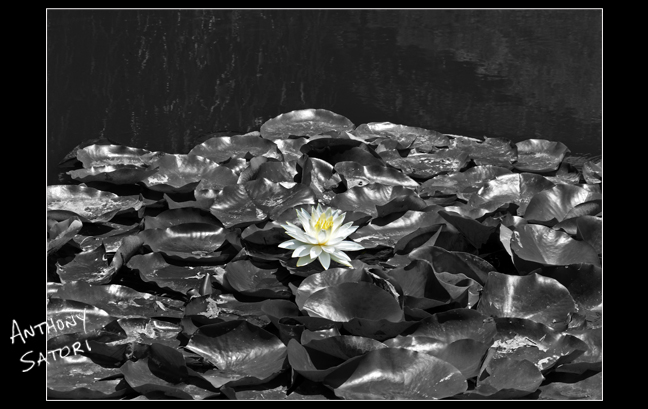
“Sacred Lotus” | Anthony Satori
“When the ground dissolves beneath me, I float.”
– Alan Watts
When I consider this statement by Watts, I place it in what I would call the “present eternal” tense. This is, of course, not an actual grammatical tense in any existing language, as far as I know. But for me, it holds a very special place in the lexicon. It is a way to say, “This is true, right now; but it is also true in a manner that transcends the limitations of time and space.” For example, when we tell someone that we love them, from the depth of our heart, I believe that we are speaking in the “present eternal” tense. This is because true Love exists outside of the limits of time and space. Similarly, when God told Moses that His name was, “I AM,” I believe He was indicating that He, in the same way, inhabits this transcendent, eternal realm.
Now, let us consider the sacred lotus. Its roots are sunk deeply into the earth, anchored firmly in the loamy mud at the bottom of a lake, pond, or slow-moving river. The lotus flower derives stability and nourishment from the depth of its roots, and yet its blossom lives far above this stratum, perched weightlessly and elegantly on top of the water. There it lives, peacefully aloft, supported by a bed of leaves, suspended effortlessly above all of the darkness, dirt, and tumult swirling below. When the ground dissolves beneath it, it floats. This is the lotus blossom’s sacred nature, now and always. It was created to live in the sunlight, to transcend the darkness of the water below, just like we are.
The lotus flower also has the rare ability – an ability usually reserved exclusively for animals – to produce its own heat. Consequently, it can regulate its own interior temperature and thereby moderate its own internal state of being in response to, even in direct contrast to, its environment. In addition to this, a dormant lotus seed can remain viable for hundreds of years, with some documented cases of dormant seeds over even 1000 years old re-awakening and successfully flowering. It doesn’t take much to see why this wondrous flower has been a source of fascination and inspiration – as well as a mystical symbol of transcendence and longevity – for artists, poets, and spiritualists alike.
So, the next time you feel stuck in the mud, exhausted by the murky tumult that swirls all around you, remember: you are a sacred lotus. When the ground dissolves beneath you, float. This is your sacred nature, now and always.

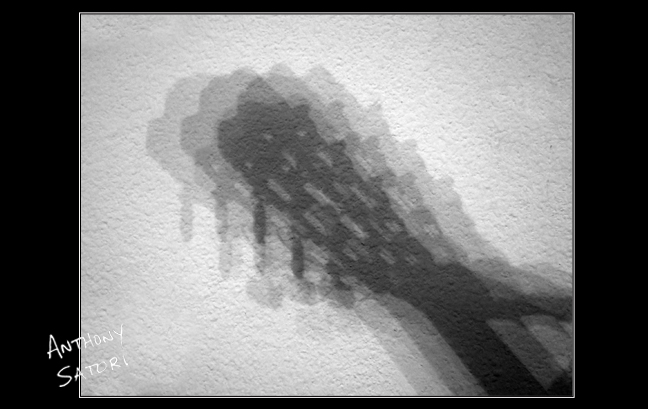
“Music in the Soul” | Anthony Satori
“Music in the soul can be heard by the Universe.”
– Lao Tzu
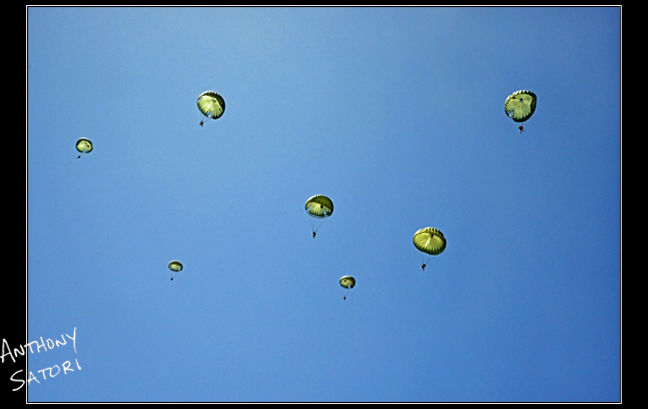
“Jumpers” | Anthony Satori
“Life is a travelling to the edge of knowledge, and then a leap taken.”
– D. H. Lawrence
It is good to be prepared. It is important to gather as much knowledge and information about any given situation as is reasonably practical. But then, when the time comes, it is just as important to be ready and willing to take the leap. We must come to peace with the fact that, in this life, we will almost always be acting upon imperfect knowledge. This is inevitable; it is simply part of the human experience. But don’t let this keep you from taking action. Jump into life with enthusiasm. Engage with the present moment fully. And whether, at any given moment, you happen to be facing a challenge or a triumph, a conservation of energy or a state of full exertion, always seek to find a way to cherish this particular, individual step the journey. Strive to live your best life, every day. Endeavor to embrace each moment with optimism, creativity, gratitude, and joy. To do this the most pure expression of appreciation toward the universe, and toward God, that we could ever hope to make. To do this is an act of faith. To do this is an act of courage. To do this is an act of love.
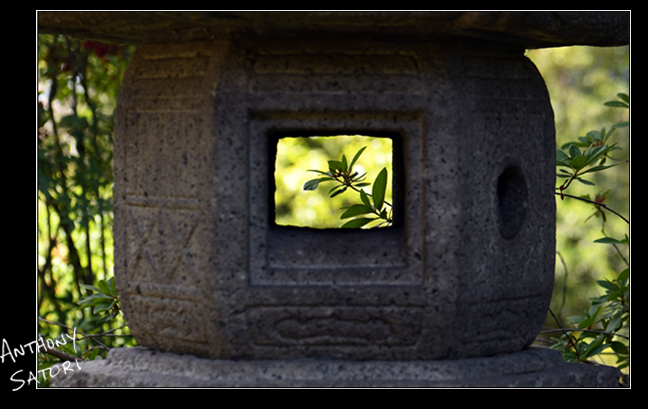
“Stone Lantern” | Anthony Satori
“Realize deeply that the present moment is all you ever have. Make the Now the primary focus of your life.”
– Eckhart Tolle
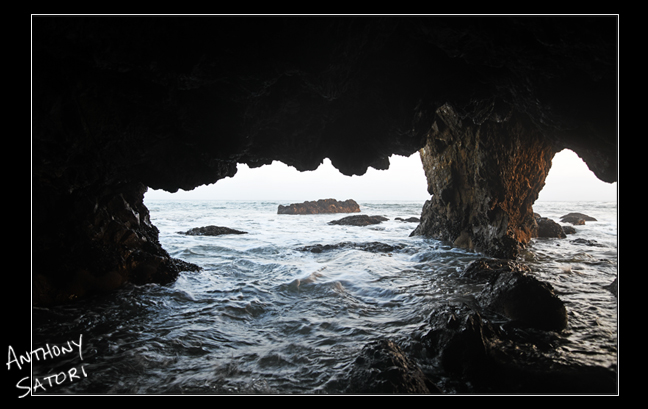
“Sea Cave” | Anthony Satori
“The softest things in the world overcome the hardest things in the world.”
– Lao Tzu

“Autumn” | Anthony Satori
“Autumn is a second spring where every leaf is a flower.”
– Albert Camus
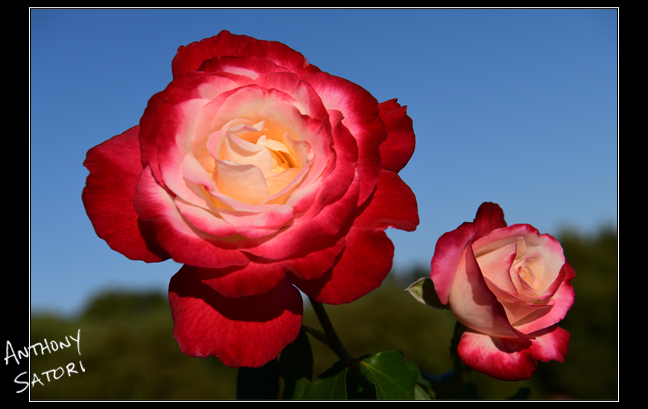
“Double Delight” | Anthony Satori
“It gives you a good feeling. Each year, you rediscover in a garden the magic of life. A flower arrives, and it is a miracle. The leaves fall in the autumn, and it looks fantastic. There is a tenderness about a garden, and you can’t help but be sensitive to that.”
– Hubert de Givenchy
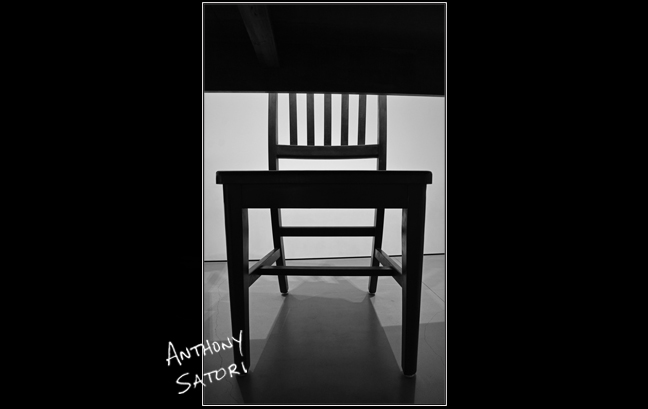
“Chair” | Anthony Satori
It is quite mystical, really, how something physical – a place, a type of flower, an inanimate object; even a color, a sound, a flavor, or a scent – can become so full of meaning and beauty, merely from having accompanied a moment in your life when you felt great joy.
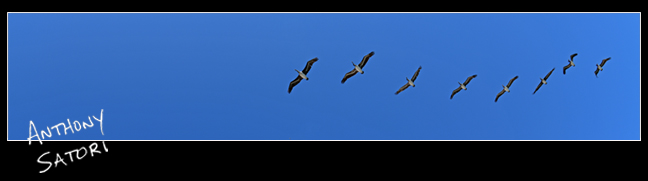
“Cormorants on the Wind” | Anthony Satori
“More and more it seems to me that the ordering of nature is an art akin to music – fugues in a shell, counterpoints in fibers, throbbing rhythms in waves of sound, light, and nerve. And oneself is connected with it quite inextricably – an electronic interweaving of paths, circuits, and impulses that stretch and hum throughout the whole of time and space.”
– Alan Watts
 Satori Circle | Art & Culture