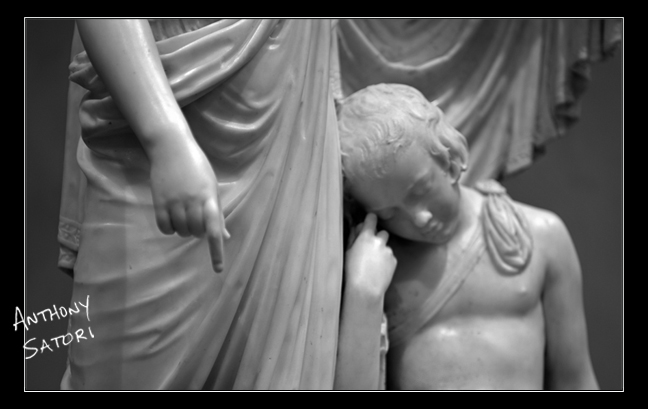
“Apollo” | Anthony Satori
“I have never let go of the thought that you are with me, always. You will always be where my heart calls home.”
– Ranata Suzuki
“Apollo” | Anthony Satori
“I have never let go of the thought that you are with me, always. You will always be where my heart calls home.”
– Ranata Suzuki
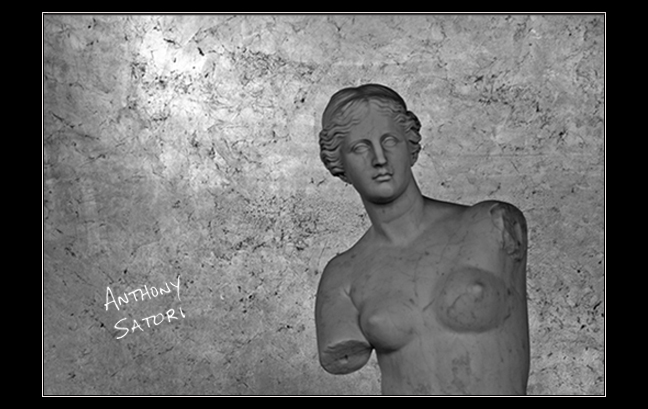
“Venus de Milo” | Anthony Satori
“Elegance is often confused with superficiality, lack of depth. This is a serious mistake: human beings need to have elegance in their actions and in their posture because this word is synonymous with good taste, amiability, equilibrium, and harmony.”
– Paulo Coelho
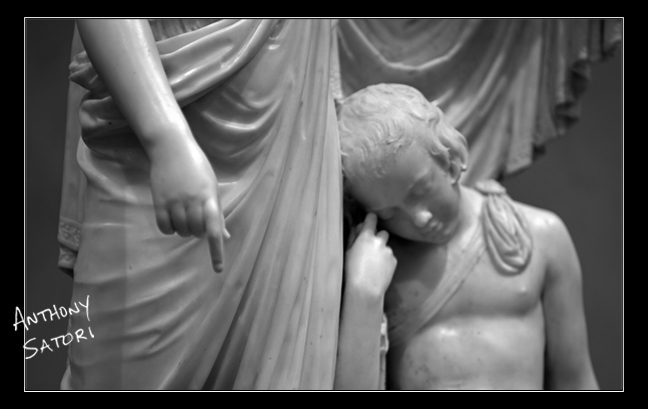
“Prayer” | Anthony Satori
“There are thoughts which are prayers. There are moments when, whatever the posture of the body, the soul is on its knees.”
– Victor Hugo
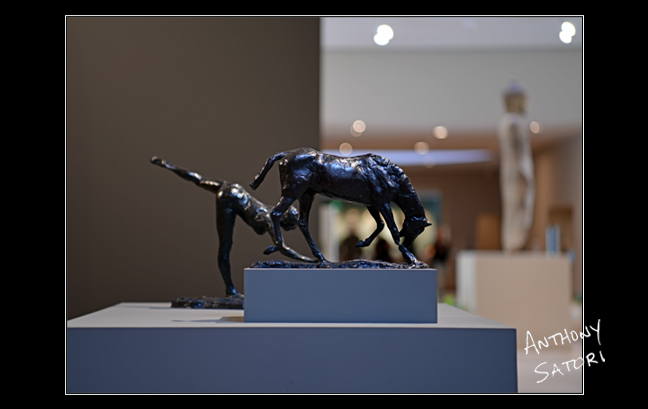
“Dancer, Racehorse, Buddha” | Anthony Satori
“To enjoy good health, to bring true happiness to one’s family, to bring peace to all, one must first discipline and control one’s own mind. If you can control your mind you can find the way to Enlightenment, and all wisdom and virtue will naturally come to you.”
– Buddha
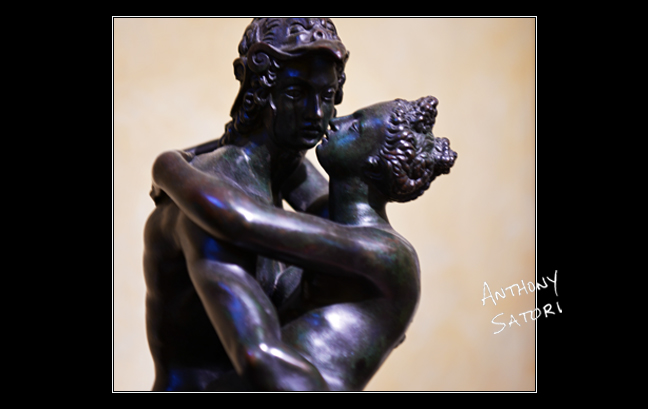
“Embrace” | Anthony Satori
“Love is, of all the passions, the strongest – for it attacks simultaneously the head, the heart, and the senses.”
– Lao Tzu
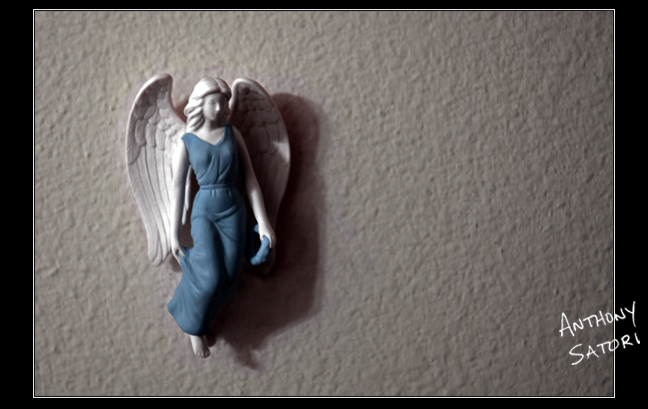
“Angel in a Blue Dress” | Anthony Satori
“There’s a spirit in anything, I think, into which we weave our soul.”
– Richard Bach
We’ve been given the gift of a New Year! If we look carefully and pay attention, we will find it overflowing with new opportunities to embrace life, new ways to elevate our consciousness and deepen our inner peace, and new paths toward invigorating the health of our minds, bodies, and spirits. Each new year, each new season, each new day is a true gift – because it is the gift of Life. Cherish it!
Happy New Year, everyone!

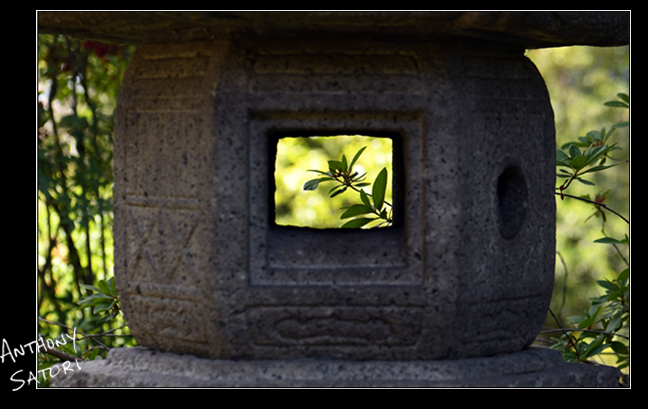
“Stone Lantern” | Anthony Satori
“Realize deeply that the present moment is all you ever have. Make the Now the primary focus of your life.”
– Eckhart Tolle
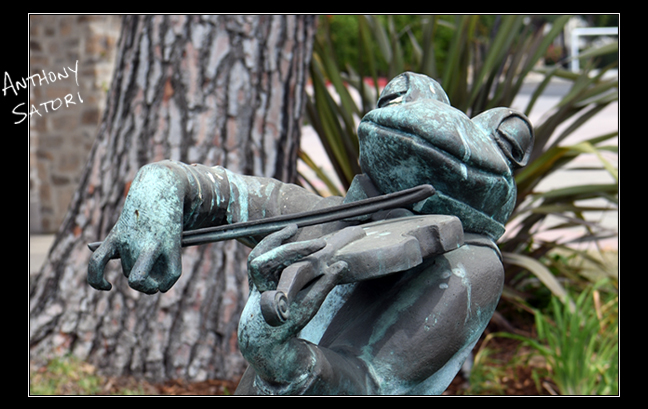
“Violin” | Anthony Satori
“If a little dreaming is dangerous, the cure for it is not to dream less, but to dream more, to dream all the time.”
– Marcel Proust
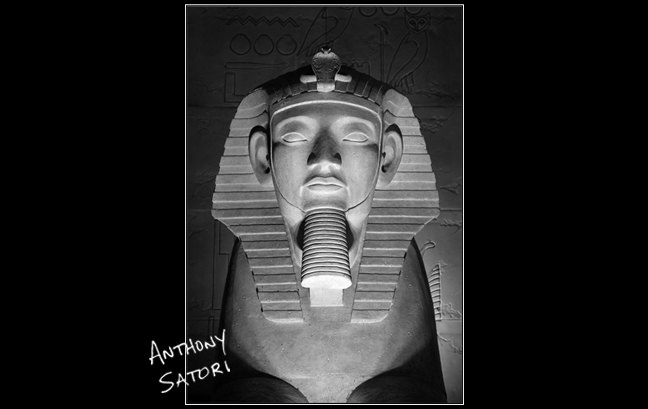
“Sphinx (with Cobra Adornment)” | Anthony Satori
A “therianthrope” is a creature or entity which is part animal, part human. In some traditions, therianthropes are even thought to be able to move between their animal and human states fluidly, thus being capable of calling upon their heightened powers at will.
“Apotheosis” is the elevation of something or someone from a secular status to the level of a god. It can also mean when an object or a person achieves the culmination of their potential.
It is surely no coincidence that we often name our brands of automobile – some of our most powerful modern tools – after animals. From Jaguar to Pantera to Mustang, we identify these intensely personal and empowering machines with the names and images of some of the most natively powerful creatures that we can conjure, and then we drive them as if they were an extension of our own human selves. While driving, we very often come to identify completely with our vehicles, and by doing so, it is almost as if we are becoming like gods, or demi-gods, experiencing an elevation of our individual powers by extension. When we join with the spirit of a powerful animal in this way, to some degree we may be experiencing, somewhere deep in our psyche, even in our subconscious mind, something resembling a truly therianthropic apotheosis.
This concept becomes especially interesting when we consider how far back in history – even pre-history – the human race has been irresistibly drawn to the idea of therianthropy. Images and stories of part human/part animal entities – most often accompanied by a considerable elevation in prowess, even the attainment of god-like status – pervades the mythology of virtually every culture on earth. From the majestic centaurs of Greek mythology, to the alluring mermaids of ancient mariners, to the bird-gods of Native American cultures, to the formidable Minotaur destroying everyone who dared venture into his Athenian labyrinth (until he was finally killed by Theseus), hybrid human/animal creatures have populated our conceptual landscape for millennia. Even in our modern age, phantasms such as vampires and werewolves – with all of their attendant superhuman abilities – follow this same pattern.
What is particularly striking, however, is the fact that therianthropic ideations date back even further than the ancient Greeks (circa 800 BC). Similar images stretch back a mind-boggling 5,000+ years to ancient Egypt, as exemplified by the god Anubis who had the body of a man and the head of a jackal, or the Sphinx which combines distinctly human features with powerful feline attributes.
Even more remarkable, therianthropic images reach even further back than this, upwards of an astounding 40,000+ years in the cave paintings of Europe. In fact, the very earliest of mankind’s visual expressions – that is, the very first subjects humans considered important enough to capture in representative artworks – portray a remarkably rich array of unmistakably therianthropic creatures, painted directly alongside entirely realistic representations of animals which lived at the time. From the very beginning, mankind has been depicting therianthropes, and such representations continue to show up, unabated, for the entirety of the thread of human artistic and mythological expression, all the way up to the present moment. It is clear that we have been dreaming of such metamorphoses – and the accompanying apotheoses – since the beginning of human imagination. Is it any wonder, then, that we would reach for such elevations in our use of modern technology? How could we not attempt to use our power of innovation to create extensions and elevations of our mortal being, when we have been imagining such hybrid existences since the beginning of time?
Or maybe – just maybe – such images were not mere figments of our imagination, at all, but were actually attempts to preserve a hazy and almost-forgotten past. Were the ancient cave painters perhaps actually depicting something real in their experience or recent memory? Does the veil of human pre-history hide a vastly more fantastic story of this planet than we could ever imagine? Did actual therianthropes roam the earth, and were these ancient depictions and mythologies actually realistic depictions of a world both fantastic and utterly familiar to these early artists and storytellers?
It is clear that deep echoes of such concepts resonate powerfully in our human minds. It is up to us to decide, then, in the face of such universality, if such ideations are purely products of our imagination, or if they are rather our collective consciousness trying to connect us with some deeper recollections of a mysterious, yet very real, past.
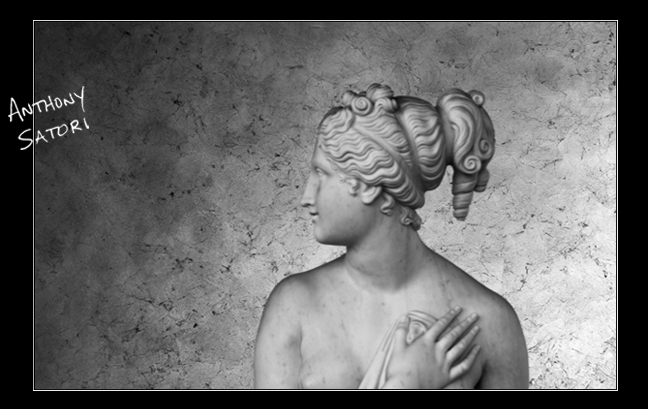
“Shy Venus” | Anthony Satori
“What’s wrong is not a problem with the great discoveries of science. Information is always better than ignorance, no matter what information or what ignorance. What is wrong is the belief behind the information, the belief that information will change the world. It won’t. Information without human understanding is like an answer without its question: meaningless. And human understanding is only possible through the arts and humanities. It is the work of art that creates the human perspective in which information turns to truth.”
– Archibald MacLeish
One of the most startling revelations of quantum physics over the last century has been the assertion that, at the most fundamental levels of existence, there are virtually no inexorable truths or inherent meanings – just pure energy. Put another way: the closer we get to the subatomic realm, the more we discover that the cosmos seems to be made up entirely of nothing more than field equations and mathematical probabilities. All of the numbers, all of the wave functions, all of the raw data – all that they actually seem to be doing is merely suggesting or indicating a probability that some or other discrete particle, phenomenon, or event will occur at some particular point in time and space. Beyond this, there is, arguably, essentially nothing – that is, no “thing” – or perhaps more accurately, some varying probability of “everything.”
It seems that it is only when a conscious mind observes a particular particle or phenomenon that it becomes – almost mystically – transformed from a probabilistic wave function into something that is truly unique, measurable, and discrete. Conscious awareness alone, then, seems to be the singular mechanism in the universe which has the power to transform pure energy into something which has substance, meaning, and truth. And it is the arts and humanities – encompassing, in my view, acts of creativity, kindness, and love, and experiences of transcendence, enlightenment, and spiritual revelation – which, at their best, connect us most directly with this higher consciousness in our human nature, and thereby empower us to become the most effective co-creators of our own universe.
Let us then strive to use these profound gifts mindfully, compassionately, nobly, and constructively. Let us endeavor to make this the best of all possible worlds.
 Satori Circle | Art & Culture