“It is the possession of a great heart or a great mind, and not the mere fame of it, which is worth having and which is conducive to happiness. Not fame, but that which deserves to be famous, is what one should hold in esteem. Fame itself is only an accident.
Likewise, one who deserves fame without getting it possesses by far the more important element of happiness. It is not that a person is thought to be great by the masses… but that a person really is great, which should move us to value their position. And their happiness should not derive from the fact that posterity may hear of them, but rather from the fact that they are the creator of thoughts worthy to be treasured and studied.”
“What’s wrong is not a problem with the great discoveries of science. Information is always better than ignorance, no matter what information or what ignorance. What is wrong is the belief behind the information, the belief that information will change the world. It won’t. Information without human understanding is like an answer without its question: meaningless. And human understanding is only possible through the arts and humanities. It is the work of art that creates the human perspective in which information turns to truth.”
– Archibald MacLeish
One of the most startling revelations of quantum physics over the last century has been the assertion that, at the most fundamental levels of existence, there are virtually no inexorable truths or inherent meanings – just pure energy. Put another way: the closer we get to the subatomic realm, the more we discover that the cosmos seems to be made up entirely of nothing more than field equations and mathematical probabilities. All of the numbers, all of the wave functions, all of the raw data – all that they actually seem to be doing is merely suggesting or indicating a probability that some or other discrete particle, phenomenon, or event will occur at some particular point in time and space. Beyond this, there is, arguably, essentially nothing – that is, no “thing” – or perhaps more accurately, some varying probability of “everything.”
It seems that it is only when a conscious mind observes a particular particle or phenomenon that it becomes – almost mystically – transformed from a probabilistic wave function into something that is truly unique, measurable, and discrete. Conscious awareness alone, then, seems to be the singular mechanism in the universe which has the power to transform pure energy into something which has substance, meaning, and truth. And it is the arts and humanities – encompassing, in my view, acts of creativity, kindness, and love, and experiences of transcendence, enlightenment, and spiritual revelation – which, at their best, connect us most directly with this higher consciousness in our human nature, and thereby empower us to become the most effective co-creators of our own universe.
Let us then strive to use these profound gifts mindfully, compassionately, nobly, and constructively. Let us endeavor to make this the best of all possible worlds.
“In dwelling, live close to the ground. In thinking, keep to the simple. In conflict, be fair and generous. In governing, don’t try to control. In work, do what you love. In family life, be completely present.”
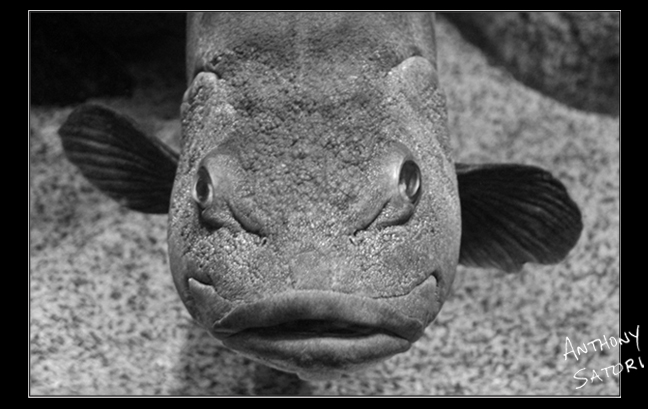
“We do not hear nature boasting about being nature, nor water holding a conference on the technique of flowing. So much rhetoric would be wasted on those who have no use for it. The man of Tao lives in the Tao, like a fish in water. If we tried to teach a fish that water is physically compounded of two parts hydrogen and one part oxygen, the fish would laugh its head off.”
Compassion and strength are not mutually exclusive. In fact, they are not even at odds. True compassion is rooted in carefully cultivated principles, universal love, and clear-eyed reason. This highest version of compassion both informs and enhances strength by imbuing it with righteousness, clarity, and drive. True strength, in the same way, is rooted in wisdom, self-discipline, and courage. This highest version of strength empowers compassion by providing it with the peace and security it needs to perform at the highest levels of efficacy, humaneness, and virtue.
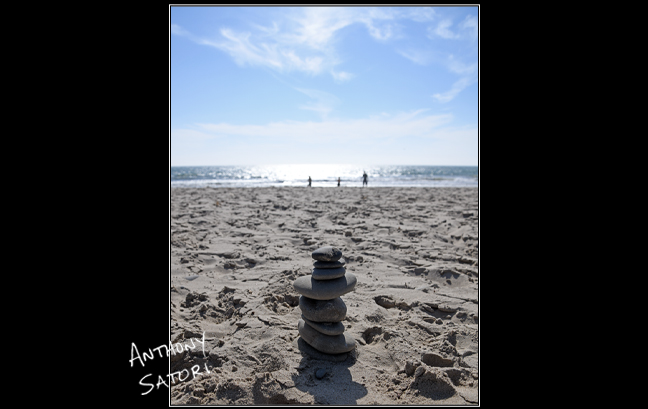
The thing about walking in sand is that you simply cannot rush. Each step takes time. Each step requires attention. You can choose a destination 10, 20, or even 100 feet away, but each step will only take you incrementally closer – slowly, deliberately – and you must make each stride mindfully and with care, so as to keep your balance and to keep yourself moving in the right direction. It is an exercise in patience. It is an exercise in presence. It is an exercise in Zen.
Sometimes you may think, “I will double my effort, triple it, maybe even multiply it five-fold.” But every such increase, even the most emphatic, tends to add at most maybe 5 or 10 percent to your speed – certainly not enough to be worth the additional expenditure of energy, not to mention the attendant elevation of stress, both physical and mental. Therefore, in the end, you eventually discover that your best strategy is merely to take it slow, to expend a reasonable amount of effort with each new step, and to move forward with calm, intention, and purpose – at the pace the sand will allow.
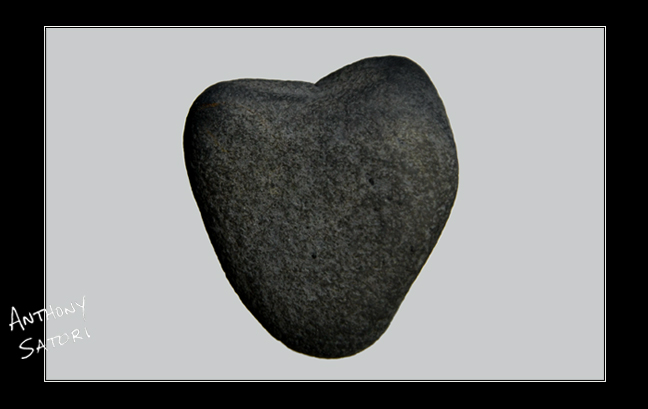
One of the delightful benefits, of course, of walking in sand in such a mindful manner is that sometimes you see things that you might have missed otherwise. Like a rock… shaped like a heart.
“I trust if your life is right, the right things will happen at the right time. If the chords are in harmony inside, I think other things will happen in the same way. That would have sounded pretentious to me once, but I believe it now.”
“One kind of happiness is to survive a storm at sea, and to reach the shore in safety. Another is to triumph over hardship. Another is moving up in wealth and strength and position. Or one can hope; there are so many hopes. Some human hopes succeed and others fail. But a truly happy life is happiness day by day.”