“Her prayer was scarcely done when a heavy numbness seized her limbs, a thin bark closed around her gentle bosom, and her hair became as moving leaves; her arms were changed into waving branches, and her feet – so swift a moment ago – stuck fast in slow-growing roots. Her face was lost in a canopy of encircling laurels. Only her shining beauty was left.”
“The Six Grandfathers have placed in this world many things, all of which should be happy. Every little thing is sent for something, and in that thing there should be happiness and the power to make happy. Like the grasses showing tender faces to each other, thus we should do, for this was the wish of the Grandfathers of the World.”
“I looked. George Shearing. And as always he leaned his blind head on his pale hand, all ears opened like the ears of an elephant. Then they urged him to get up and play. He did. Shearing began to play his chords; they rolled out of the piano in great rich showers, you’d think the man wouldn’t have time to line them up. They rolled and rolled like the sea. He played innumerable choruses with amazing chords that mounted higher and higher till the sweat splashed all over the piano and everybody listened in awe and fright. They led him off the stand after an hour. Shearing rose from the piano, dripping with sweat; these were his great days before he became cool and commercial. He went back to his dark corner, old God Shearing, and the boys said, ‘There ain’t nothing left after that.’ When he was gone, Dean pointed to the empty piano seat. ‘God’s empty chair,’ he said. God was gone; it was the silence of his departure. It was a rainy night. It was the myth of the rainy night.”
– Jack Kerouac
This text is my own compilation of two entirely separate accounts that Jack Kerouac wrote describing a single rainy night when he and “Dean” (Neal Cassady) watched George Shearing play piano at a jazz club. The more I combed through each of the two descriptions, the more I found them to be almost perfectly complimentary to each other. Eventually, it even started to seem as if Kerouac had deliberately structured them this way: consistently presenting certain elements of the experience in one description that he had left out of (or shaded differently in) the other, and vice versa. Being an avid appreciator of Kerouac’s descriptive writing, I became curious to see how the text would feel if I synthesized these two descriptions into one continuous narrative. It started as a creative exercise, but as I proceeded, it almost began to feel as if Jack had quite purposefully left this puzzle to be found and deciphered later by some especially attentive (and lucky) reader, and that I had by pure good fortune stumbled upon this riddle. Whether he did it on purpose or not, I do not know. But the combined story ended up coming together in such a compelling manner, I decided to share it with you here. I hope you enjoy!
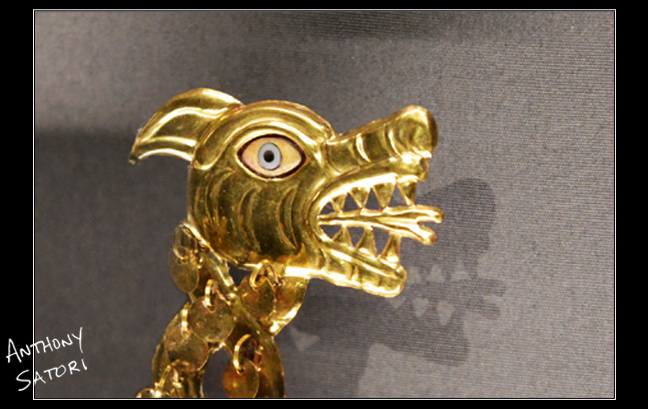
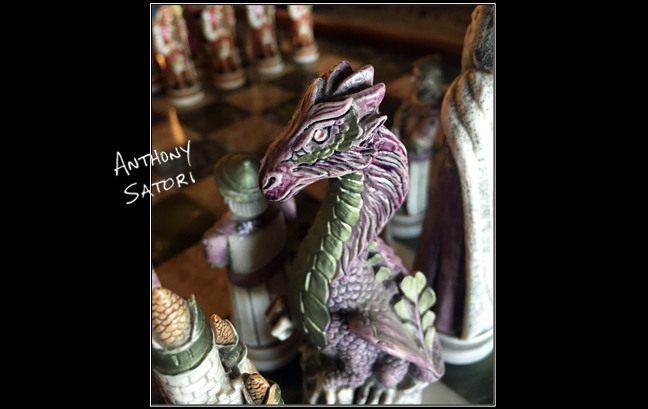
A “therianthrope” is a creature or entity which is part animal, part human. In some traditions, therianthropes are even thought to be able to move between their animal and human states fluidly, thus being capable of calling upon their heightened powers at will.
“Apotheosis” is the elevation of something or someone from a secular status to the level of a god. It can also mean when an object or a person achieves the culmination of their potential.
It is surely no coincidence that we often name our brands of automobile – some of our most powerful modern tools – after animals. From Jaguar to Pantera to Mustang, we identify these intensely personal and empowering machines with the names and images of some of the most natively powerful creatures that we can conjure, and then we drive them as if they were an extension of our own human selves. While driving, we very often come to identify completely with our vehicles, and by doing so, it is almost as if we are becoming like gods, or demi-gods, experiencing an elevation of our individual powers by extension. When we join with the spirit of a powerful animal in this way, to some degree we may be experiencing, somewhere deep in our psyche, even in our subconscious mind, something resembling a truly therianthropic apotheosis.
This concept becomes especially interesting when we consider how far back in history – even pre-history – the human race has been irresistibly drawn to the idea of therianthropy. Images and stories of part human/part animal entities – most often accompanied by a considerable elevation in prowess, even the attainment of god-like status – pervades the mythology of virtually every culture on earth. From the majestic centaurs of Greek mythology, to the alluring mermaids of ancient mariners, to the bird-gods of Native American cultures, to the formidable Minotaur destroying everyone who dared venture into his Athenian labyrinth (until he was finally killed by Theseus), hybrid human/animal creatures have populated our conceptual landscape for millennia. Even in our modern age, phantasms such as vampires and werewolves – with all of their attendant superhuman abilities – follow this same pattern.
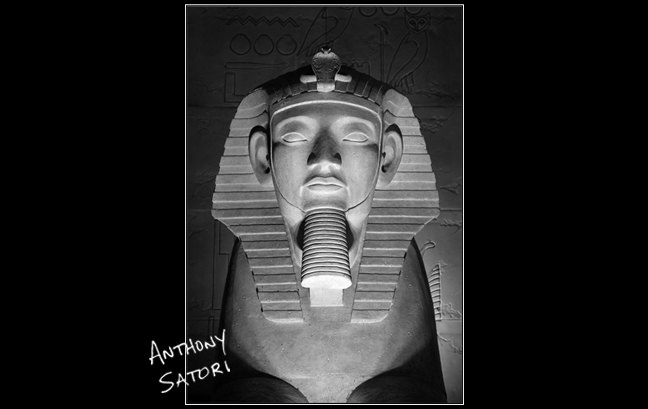
What is particularly striking, however, is the fact that therianthropic ideations date back even further than the ancient Greeks (circa 800 BC). Similar images stretch back a mind-boggling 5,000+ years to ancient Egypt, as exemplified by the god Anubis who had the body of a man and the head of a jackal, or the Sphinx which combines distinctly human features with powerful feline attributes.
Even more remarkable, therianthropic images reach even further back than this, upwards of an astounding 40,000+ years in the cave paintings of Europe. In fact, the very earliest of mankind’s visual expressions – that is, the very first subjects humans considered important enough to capture in representative artworks – portray a remarkably rich array of unmistakably therianthropic creatures, painted directly alongside entirely realistic representations of animals which lived at the time. From the very beginning, mankind has been depicting therianthropes, and such representations continue to show up, unabated, for the entirety of the thread of human artistic and mythological expression, all the way up to the present moment. It is clear that we have been dreaming of such metamorphoses – and the accompanying apotheoses – since the beginning of human imagination. Is it any wonder, then, that we would reach for such elevations in our use of modern technology? How could we not attempt to use our power of innovation to create extensions and elevations of our mortal being, when we have been imagining such hybrid existences since the beginning of time?
Or maybe – just maybe – such images were not mere figments of our imagination, at all, but were actually attempts to preserve a hazy and almost-forgotten past. Were the ancient cave painters perhaps actually depicting something real in their experience or recent memory? Does the veil of human pre-history hide a vastly more fantastic story of this planet than we could ever imagine? Did actual therianthropes roam the earth, and were these ancient depictions and mythologies actually realistic depictions of a world both fantastic and utterly familiar to these early artists and storytellers?
It is clear that deep echoes of such concepts resonate powerfully in our human minds. It is up to us to decide, then, in the face of such universality, if such ideations are purely products of our imagination, or if they are rather our collective consciousness trying to connect us with some deeper recollections of a mysterious, yet very real, past.
“Every time that someone has, with a pure heart, called upon Osiris, Dionysus, Buddha, the Tao, etc., the Son of God has answered them by sending the Holy Spirit. And the Holy Spirit has acted upon their soul, not by inciting them to abandon their religious tradition, but by bestowing upon them light.”
“This was the stillness of the eternal beginning, the world as it had always been: in a state of non-being. There I was, now, the first human being to recognize that this was the world, but who did not know that in this moment he had also first really created it. There, the cosmic meaning of consciousness became overwhelmingly clear to me: What nature leaves imperfect, art perfects, say the alchemists. In an invisible act of creation, I, Man, had put the stamp of perfection on the world, by giving it objective existence.
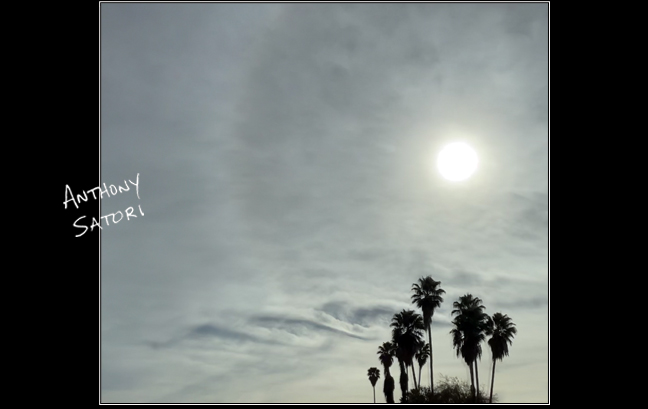
My old Pueblo friend came to my mind. He thought that the raison d’etre of his pueblo had been to help their Father, the Sun, to cross the sky each day. I had envied him for the fullness of meaning in that belief, and I had been looking about without hope for a myth of our own.
Now I knew what it was, and I knew, even more, that Man is indispensable for the completion of Creation. I knew that, in fact, he himself is the second Creator of the world, who alone has given to the world its objective existence – without which, unheard, unseen, silently, through hundreds of millions of years, it would have gone on in the profoundest night of non-being, down to its unknown end. Human consciousness created objective existence and meaning, and Man thereby found his indispensable place in the great process of Being.”
“Isn’t it astonishing that all these secrets [of nature] have been preserved for so many years just so we could discover them?”
— Orville Wright, co-inventor of the first airplane. (1903)
Nature holds so many wonderful mysteries. It’s like a giant cosmic Easter Egg hunt that has been carefully set in place for us to enjoy, and I picture a benevolent Creator just sitting back and watching, with pleasure and pride, as we seek — and gradually discover — the endless gifts and surprises that have been hidden for us throughout nature, around the universe, and even within our own souls.
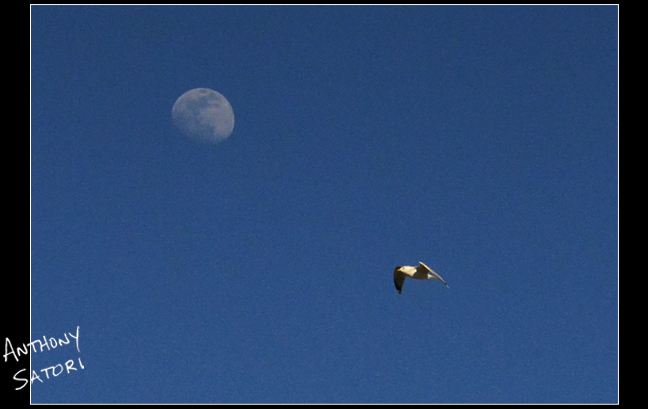
Historical Note: This week marks the 50th anniversary of the Apollo 11 mission, which sent two American astronauts to walk on the moon for the first time in human history. Just this week, as well, a brand new mission has been announced by NASA, scheduled to return humans to the moon by 2024. This new mission is called Artemis. In Greek mythology, Artemis is the godess of wilderness, exploration, archery, and the moon. She is also the twin sister of Apollo.
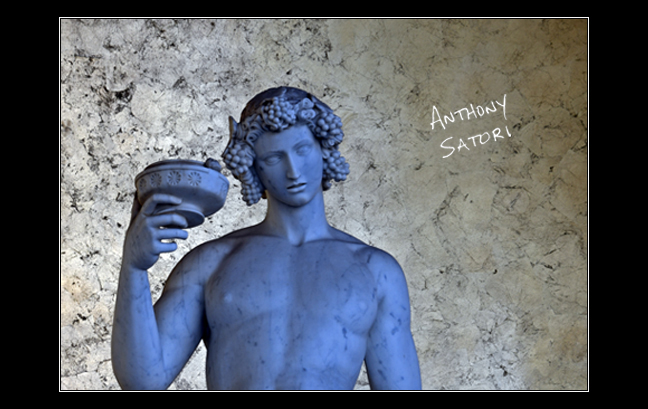
“Music, [poetry, and art] are the wine which inspire people to new generative processes, and we [artists] are Bacchus, pressing out this glorious wine for mankind and making them spiritually drunken.”



 Satori Circle | Art & Culture