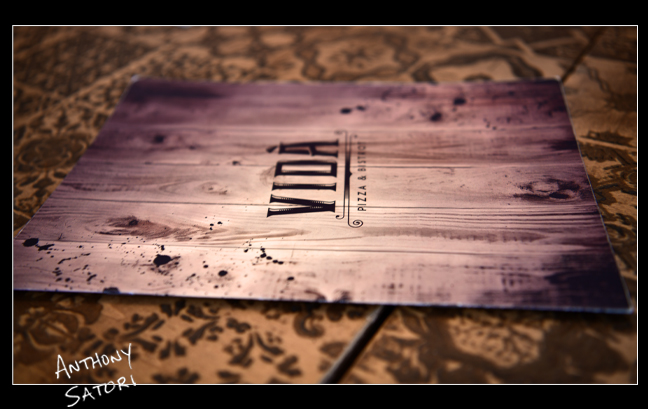
“Vida” (Sardinia, Italy) | Anthony Satori
“In the sweetness of friendship let there be laughter, and the sharing of pleasures. For in the dew of little things the heart finds its morning and is refreshed.”
– Khalil Gibran
“Vida” (Sardinia, Italy) | Anthony Satori
“In the sweetness of friendship let there be laughter, and the sharing of pleasures. For in the dew of little things the heart finds its morning and is refreshed.”
– Khalil Gibran
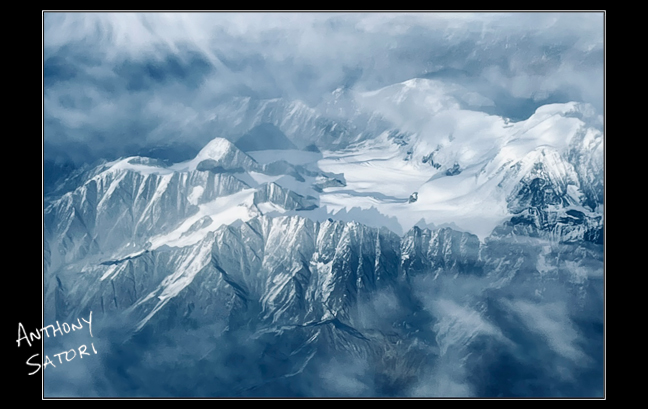
“The Italian Alps” | Anthony Satori
“Let us be together. Let us eat together. Let us be vital together. Let us be radiating the Light of Life. Such is the hidden teaching.”
– The Upanishads
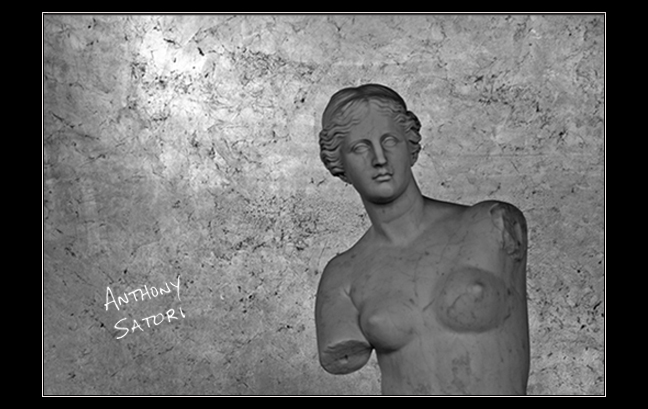
“Venus de Milo” | Anthony Satori
“Elegance is often confused with superficiality, lack of depth. This is a serious mistake: human beings need to have elegance in their actions and in their posture because this word is synonymous with good taste, amiability, equilibrium, and harmony.”
– Paulo Coelho
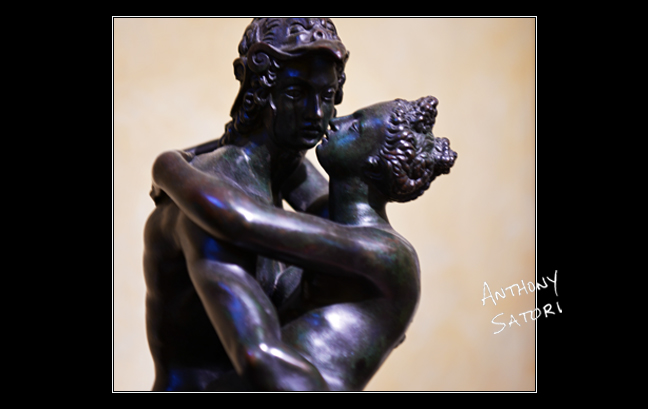
“Embrace” | Anthony Satori
“Love is, of all the passions, the strongest – for it attacks simultaneously the head, the heart, and the senses.”
– Lao Tzu
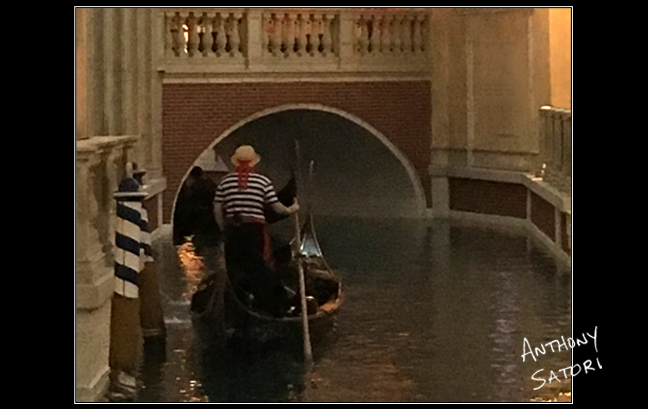
“Gondolier” –|– Anthony Satori
“I dream of painting, and then I paint my dream.”
― Vincent van Gogh
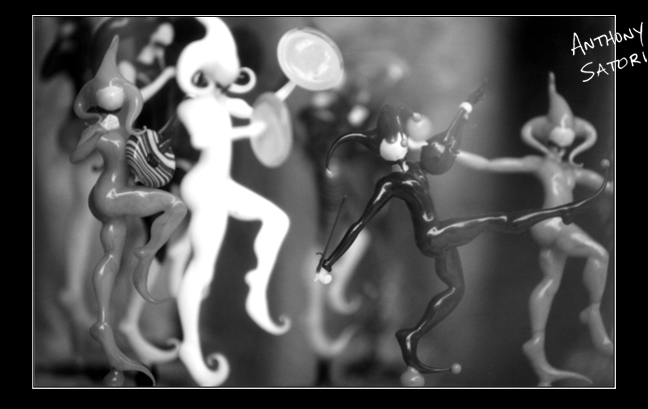
“Carnival” | (Venice, Italy) | Anthony Satori
“The dance can reveal everything mysterious that is hidden in music, and it has the additional merit of being human and palpable. Dancing is poetry with arms and legs.”
— Charles Baudelaire

“Serenity” | Anthony Satori
“Words exist because of meaning. Once you’ve gotten the meaning, you can forget the words. Where can I find someone who has forgotten words? This is who I wish to speak with.” — Chuang Tzu
When someone tunes out the noise of the outer world, allows their thoughts to become still and calm, and immerses themselves in the experience of a work of art, they are speaking with someone who has “forgotten” words. This is because art exists in a mode that goes beyond mere language, reaching directly into the realm of pure meaning.
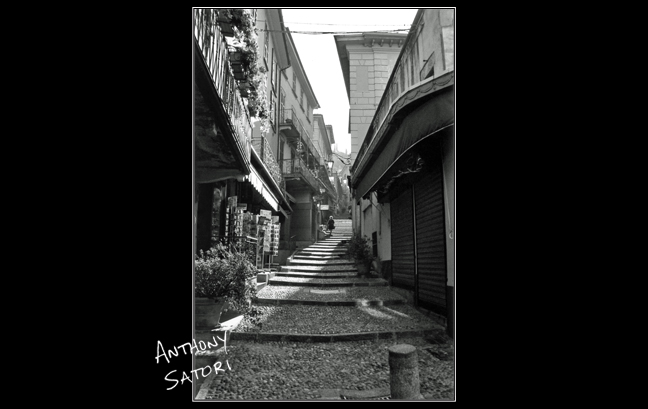
“Woman Walking on Stone Pathway (Bellagio, Italy)” | Anthony Satori
Not long ago, I visited a small lake-side town in northern Italy called Bellagio. On an early morning stroll, I took a photograph of the rising sun washing over a stone pathway that weaved upward from the main promenade. As I took the picture, I was struck by how this small road had surely remained essentially unchanged for years, decades, even centuries, and I was inspired by the wonder and romance of this notion.
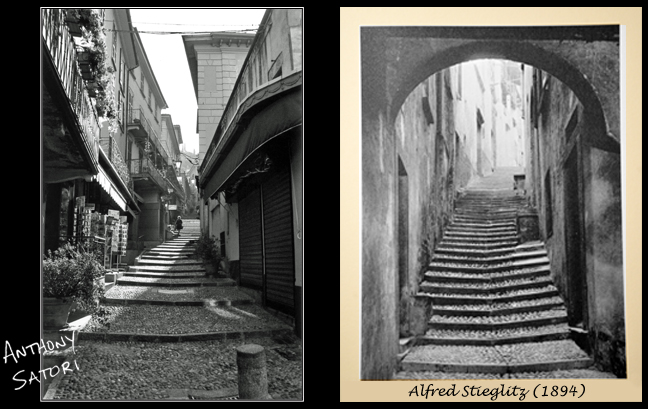
Not long after returning to the States, I came across a relatively obscure collection of photographs taken by one of the most influential pioneers of photography from the early 20th Century, Alfred Stieglitz. I already knew a fair amount about Stieglitz’ life and work as an early champion of photography as a legitimate medium of creative expression; however, these particular pictures had somehow escaped my experience up until now, perhaps because they were taken before he ever opened his first gallery, even before he moved to New York.
As I was enjoying the discovery of these remarkable early photographs, I ran across a particular image that caught my eye. It was a picture that Stieglitz took of a small cobblestone pathway in a tiny lake-side town in northern Italy. The photograph was titled, “A Road in Bellagio, 1894.” I was amazed. Here, over a hundred years before my having explored this small village and having taken a photograph expressing my awe at its beauty and timelessness, Stieglitz himself had walked along this very same cobblestone promenade and felt the very same creative impulse to capture an image of a small road weaving upward from its edge. It is wonderful how art has the ability to connect us with other spirits, even over the centuries.
Here, then, are both of the images. The image on the left is the photograph taken by me. The image on the right is Alfred Stieglitz’ photograph, taken in 1894.
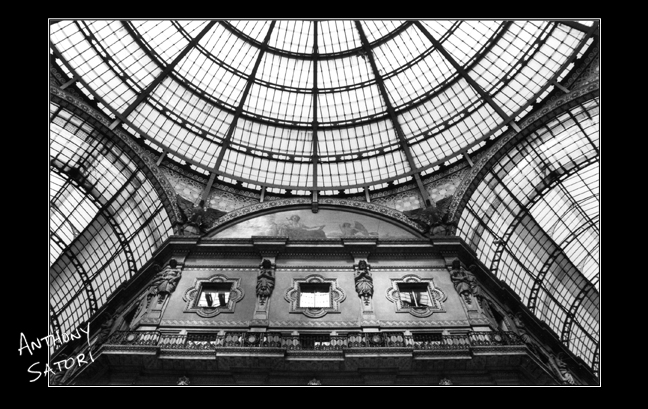
Interior, The Galleria | (Milan, Italy) | Anthony Satori
It is difficult to rival the Italians when it comes to architecture as an art form. Consider the awe-inspiring Galleria Vittorio Emanuele II, in Milan, Italy. It is a magnificent structure built with dramatically arching panes of glass, intricate cast iron latticework, and an interior filled with paintings, mosaics, and countless other elements of architectural and artistic style.
It was designed by Giuseppe Mengoni in 1861, and it was built between the years 1865 and 1877, also by him. The building was named after (and financed by) Vittorio Emanuele II, the first King of a newly unified Italy.
Other interesting facts:
1) It was intended to be exactly what it is, a shopping mall. And, over 100 years later, it still is.
2) Whenever you go to a modern shopping mall anywhere in the world and it is called “The Galleria,” it is a reference to this specific structure. (Whether the builders realize it or not.)
3) In an ironic turn of fate, Mengoni died soon after the Galleria’s completion. He fell off the roof of his own creation. (It is 154 feet tall.)
On a lighter note, a few years back I ate a Big Mac there. Madness, I know. A Big Mac in Italy, the land of incredible food. But there was a method to my madness. First, purely for the sake of the sheer juxtaposition of experience, it was novel and fun. Second, I have a healthy appetite, so there was no chance that one burger was going to slow me down. Third, and perhaps most significantly of all, you can’t have a Big Mac there anymore. That’s right, in 2012 the Galleria refused to renew McDonalds’ lease, and after a protracted round of legal jousting it was decided that the fast food giant would never return to the mall. That spot is now occupied by a Prada store. There was, of course, no way for me to foresee this at the time, but it definitely makes me all the more glad that I did it.
I suppose the point is, enjoy the moment. Have fun. A Big Mac is only as mundane as you allow it to be. Engage with the unique texture of wherever you find yourself. To be alive is amazing… savor it.
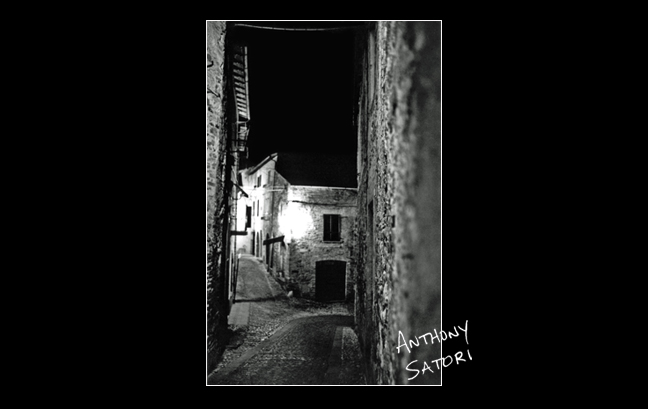
“Resonant Space” | Anthony Satori
When I look at this image, I like to think of everyone who has lived, loved, worked, and passed the time here, on this very street, for centuries. How many people have set foot upon these stones? How many fingertips have brushed along these walls? Who made a friend here, fell in love here, dreamed dreams here, lived the fullness of their life within this resonant space? I like to quiet my mind and try to imagine them, to feel their presence. I can almost hear the echoes of children laughing and playing, eager to extend the last moments of daylight before the sun goes down and they must go inside…
Art has the power to remind us that beyond all time and space, we are connected.
 Satori Circle | Art & Culture