“That’s been one of my mantras – focus and simplicity. Simple can be harder than complex: You have to work hard to get your thinking clean to make it simple. But it’s worth it in the end because once you get there, you can move mountains.”
Edgar Degas was a French painter from the Impressionist Period of the late 1800s and early 1900s. He was known for his delicate, dream-like paintings of ballet dancers and, later in his career, for his highly sympathetic images of women in domestic roles. During his lifetime, Degas’ paintings were very well-regarded, and he achieved both critical acclaim and financial success. Through the century following his passing, his stature as a great artist only increased with time. What many people don’t realize, however, is that, in addition to being an accomplished painter, Degas also made sculptures; or, rather, he wanted to make sculptures.
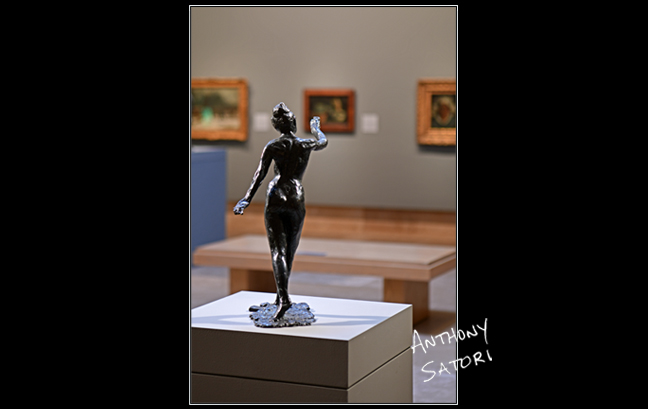
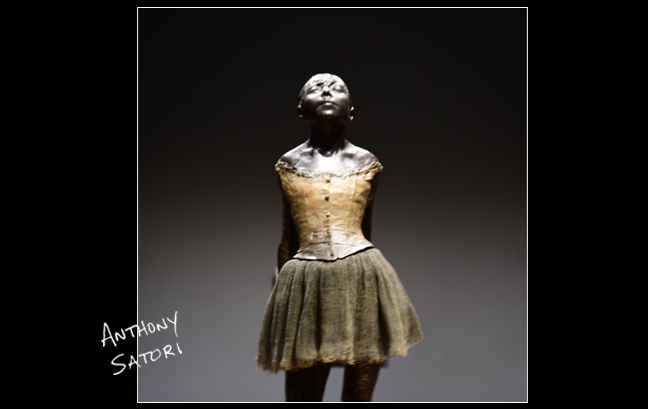
Degas, in fact, exhibited only one sculpture in his entire career: The Little Dancer of Fourteen Years (1881). It was a 1/3 life-size wax figure of a young girl striking a balletic pose, gazing upward with an enigmatic look on her face. She is wearing ballet shoes, a corset, and a skirt, with a white bow draped down her back. Upon its exhibition, it was so badly received by the public and by the critics, both for its “realism” and for its use of “unconventional” materials – including fabric-weaved tulle for the skirt, real human hair for the wig, and wax-coated ballet slippers on the feet – he took the piece down, brought it back to his studio, and never exhibited the artwork again. He was never to exhibit this sculpture – or any other sculptural work – for the remainder of his life. While he would continue over the next four decades to sculpt numerous figures in wax and clay in his studio – beautiful, graceful figures, mostly of women and horses – he never exhibited them publicly, and never cast even a single one of them in bronze.
Thankfully, after Degas passed away, his heirs discovered over 150 wax, clay, and plastiline sculptures in his studio, many of them still intact, and, within a couple of years, they enlisted Degas’ close friend and sculptor Albert Bartholomé to prepare over 70 of the best-preserved pieces for limited-edition bronze castings. Thus, the world was presented posthumously with an almost entirely never-before-seen body of sculptural artwork from an already world-famous painter, and the works have been shown and enjoyed throughout the world in museum collections ever since.
How poignant, to think that even an artist of such fame and renown as Edgar Degas could have been stung so badly by a single bad reception of a solitary piece of work that he never exhibited another sculpture in his lifetime. The world was almost kept from experiencing a complete “second” body of work from a quite wonderful artist, merely due to the callousness of a handful of critics. Thankfully, he had the pure desire and self-motivation to continue to create sculptural works for his own pleasure and edification, and, as a result, we have them to enjoy and appreciate today.
If you are curious to see what the infamous Little Dancer looks like, I have included my own photograph of it below. In terms of Degas’ sculptural career, this is the artwork that started (and almost ended) it all.
___________________
“Degas’ Little Dancer of Fourteen Years” | Anthony Satori
“Peace is the beauty of life. It is sunshine. It is the smile of a child, the love of a mother, the joy of a father, the togetherness of a family. It is the advancement of man, the victory of a just cause, the triumph of virtue.”
“There’s a spirit in anything, I think, into which we weave our soul.”
– Richard Bach
We’ve been given the gift of a New Year! If we look carefully and pay attention, we will find it overflowing with new opportunities to embrace life, new ways to elevate our consciousness and deepen our inner peace, and new paths toward invigorating the health of our minds, bodies, and spirits. Each new year, each new season, each new day is a true gift – because it is the gift of Life. Cherish it!
“We shall find peace. We shall hear angels. We shall see the sky sparkling with diamonds.”
– Anton Chekhov
It’s Christmas! What a wonderful opportunity to share love, joy, and positive energy with our friends, family, and loved ones. The holidays are a perfect time to remind ourselves to savor the simple pleasures in life, to cherish the special people around us, and to cultivate compassion and gratitude in our hearts, every day.
“They say that it’s an inexhaustible well. The thing that comforts me about it is the idea that all of this is from a singular Source. And that this Source is ultimately kind. And even though we may not understand the intentions of this Source, we are all connected and bound by it.”
When I consider this statement by Watts, I place it in what I would call the “present eternal” tense. This is, of course, not an actual grammatical tense in any existing language, as far as I know. But for me, it holds a very special place in the lexicon. It is a way to say, “This is true, right now; but it is also true in a manner that transcends the limitations of time and space.” For example, when we tell someone that we love them, from the depth of our heart, I believe that we are speaking in the “present eternal” tense. This is because true Love exists outside of the limits of time and space. Similarly, when God told Moses that His name was, “I AM,” I believe He was indicating that He, in the same way, inhabits this transcendent, eternal realm.
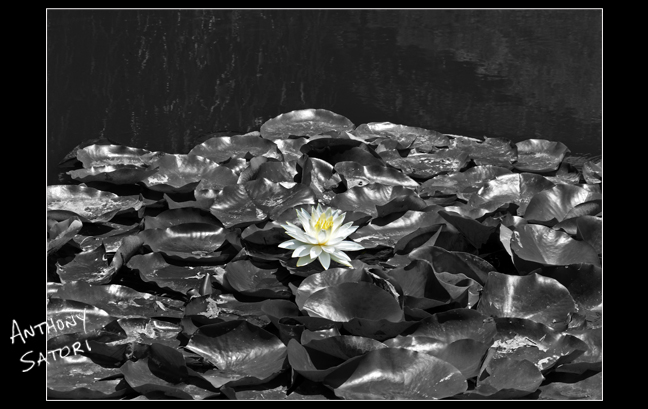
Now, let us consider the sacred lotus. Its roots are sunk deeply into the earth, anchored firmly in the loamy mud at the bottom of a lake, pond, or slow-moving river. The lotus flower derives stability and nourishment from the depth of its roots, and yet its blossom lives far above this stratum, perched weightlessly and elegantly on top of the water. There it lives, peacefully aloft, supported by a bed of leaves, suspended effortlessly above all of the darkness, dirt, and tumult swirling below. When the ground dissolves beneath it, it floats. This is the lotus blossom’s sacred nature, now and always. It was created to live in the sunlight, to transcend the darkness of the water below, just like we are.
The lotus flower also has the rare ability – an ability usually reserved exclusively for animals – to produce its own heat. Consequently, it can regulate its own interior temperature and thereby moderate its own internal state of being in response to, even in direct contrast to, its environment. In addition to this, a dormant lotus seed can remain viable for hundreds of years, with some documented cases of dormant seeds over even 1000 years old re-awakening and successfully flowering. It doesn’t take much to see why this wondrous flower has been a source of fascination and inspiration – as well as a mystical symbol of transcendence and longevity – for artists, poets, and spiritualists alike.
So, the next time you feel stuck in the mud, exhausted by the murky tumult that swirls all around you, remember: you are a sacred lotus. When the ground dissolves beneath you, float. This is your sacred nature, now and always.
“Life is a travelling to the edge of knowledge, and then a leap taken.”
– D. H. Lawrence
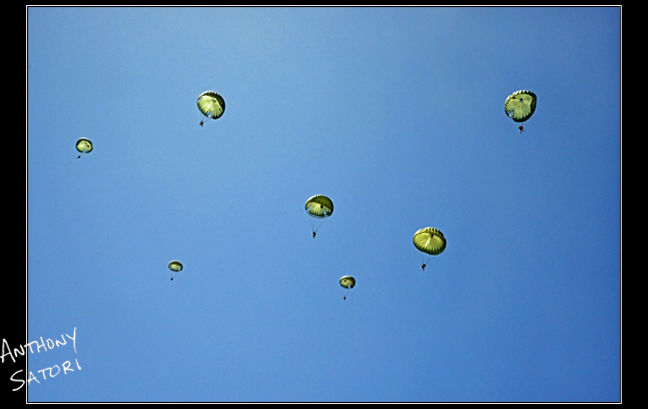
It is good to be prepared. It is important to gather as much knowledge and information about any given situation as is reasonably practical. But then, when the time comes, it is just as important to be ready and willing to take the leap. We must come to peace with the fact that, in this life, we will almost always be acting upon imperfect knowledge. This is inevitable; it is simply part of the human experience. But don’t let this keep you from taking action. Jump into life with enthusiasm. Engage with the present moment fully. And whether, at any given moment, you happen to be facing a challenge or a triumph, a conservation of energy or a state of full exertion, always seek to find a way to cherish this particular, individual step the journey. Strive to live your best life, every day. Endeavor to embrace each moment with optimism, creativity, gratitude, and joy. To do this the most pure expression of appreciation toward the universe, and toward God, that we could ever hope to make. To do this is an act of faith. To do this is an act of courage. To do this is an act of love.
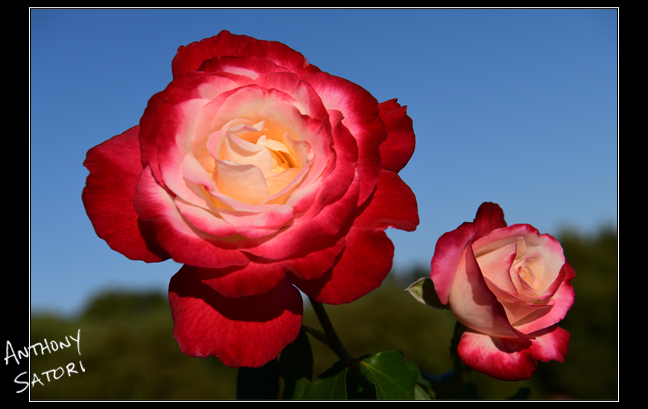
“It gives you a good feeling. Each year, you rediscover in a garden the magic of life. A flower arrives, and it is a miracle. The leaves fall in the autumn, and it looks fantastic. There is a tenderness about a garden, and you can’t help but be sensitive to that.”




 Satori Circle | Art & Culture