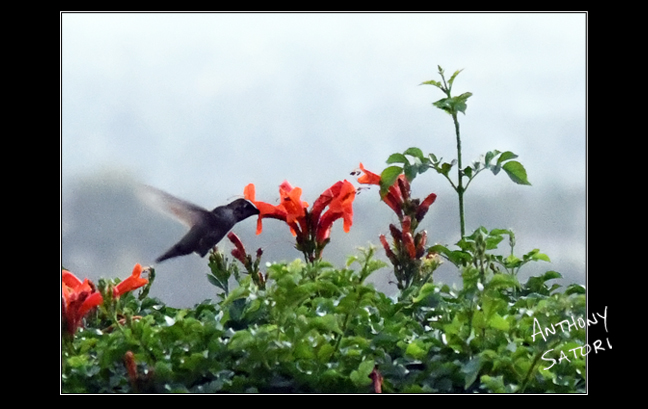
“Hummingbird at a Flower” | Anthony Satori
“I’m really quite simple. I plant flowers and watch them grow. I stay at home and watch the river flow.”
– George Harrison
“Hummingbird at a Flower” | Anthony Satori
“I’m really quite simple. I plant flowers and watch them grow. I stay at home and watch the river flow.”
– George Harrison
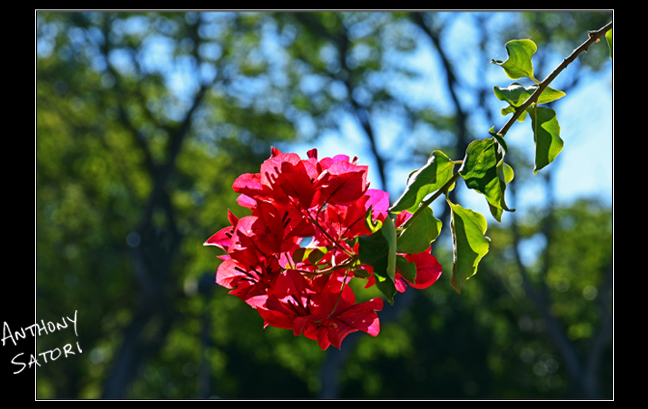
“Red Flowers” | Anthony Satori
“He is happiest, be he king or peasant, who finds peace in his home.”
– Goethe
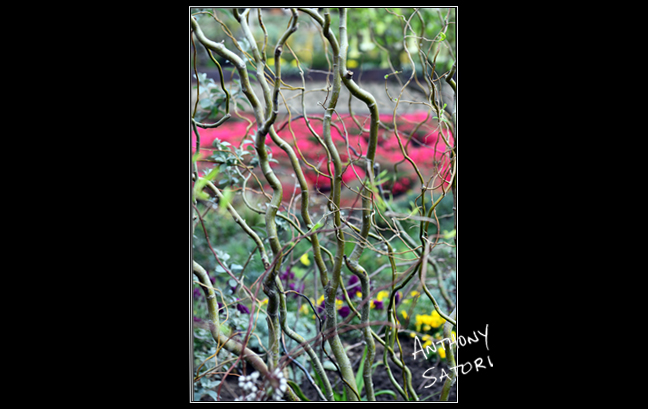
“Vines” | Anthony Satori
“Reason, ruling alone, is a force confining. Passion, unattended, is a flame that burns to its own destruction. Therefore let passion exalt your reason, so that it may sing; and let reason direct your passion, so that it may live.”
– Khalil Gibran
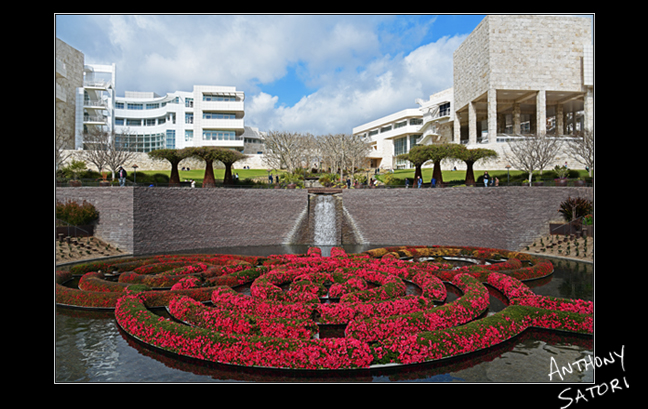
“Getty Center Garden” | Anthony Satori
If we focus our hearts and minds on the good and beautiful things that we truly desire, then 1) they will be drawn to us, 2) we will recognize them when they arrive, and 3) we will have the courage, strength, and faith to grab ahold of them and make them our own.

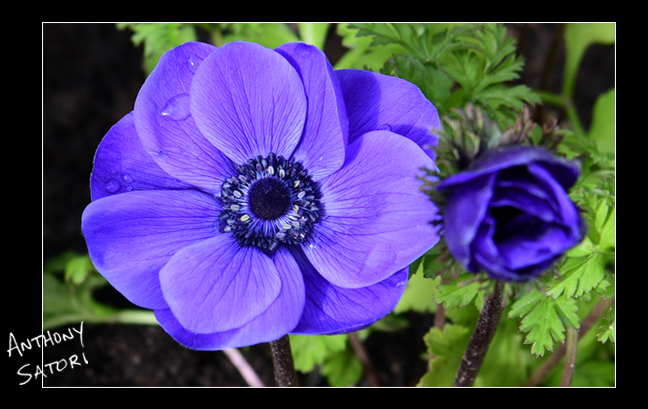
“Bloom” | Anthony Satori
“The Six Grandfathers have placed in this world many things, all of which should be happy. Every little thing is sent for something, and in that thing there should be happiness and the power to make happy. Like the grasses showing tender faces to each other, thus we should do, for this was the wish of the Grandfathers of the World.”
– Black Elk
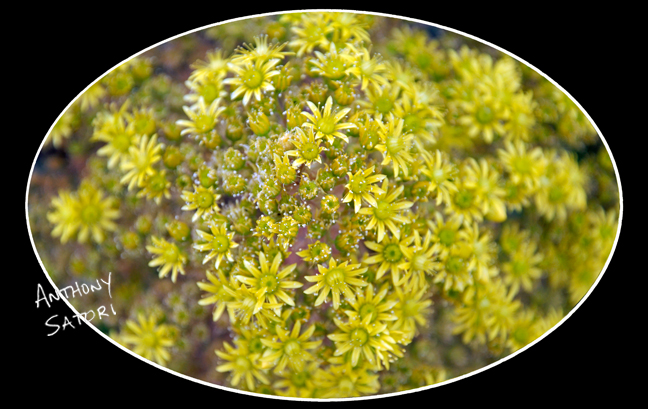
“Flower Burst” | Anthony Satori
“Peace is the beauty of life. It is sunshine. It is the smile of a child, the love of a mother, the joy of a father, the togetherness of a family. It is the advancement of man, the victory of a just cause, the triumph of virtue.”
– Menachem Begin
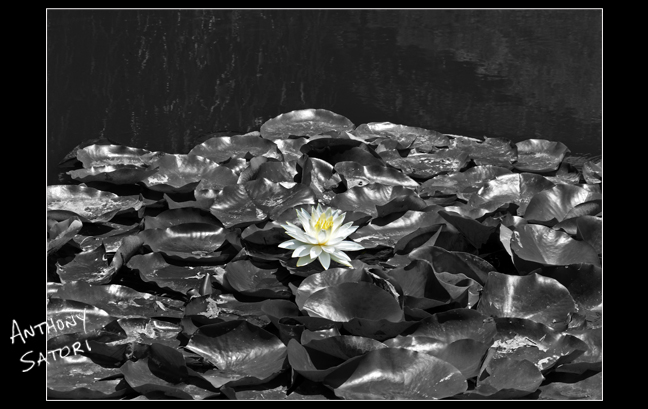
“Sacred Lotus” | Anthony Satori
“When the ground dissolves beneath me, I float.”
– Alan Watts
When I consider this statement by Watts, I place it in what I would call the “present eternal” tense. This is, of course, not an actual grammatical tense in any existing language, as far as I know. But for me, it holds a very special place in the lexicon. It is a way to say, “This is true, right now; but it is also true in a manner that transcends the limitations of time and space.” For example, when we tell someone that we love them, from the depth of our heart, I believe that we are speaking in the “present eternal” tense. This is because true Love exists outside of the limits of time and space. Similarly, when God told Moses that His name was, “I AM,” I believe He was indicating that He, in the same way, inhabits this transcendent, eternal realm.
Now, let us consider the sacred lotus. Its roots are sunk deeply into the earth, anchored firmly in the loamy mud at the bottom of a lake, pond, or slow-moving river. The lotus flower derives stability and nourishment from the depth of its roots, and yet its blossom lives far above this stratum, perched weightlessly and elegantly on top of the water. There it lives, peacefully aloft, supported by a bed of leaves, suspended effortlessly above all of the darkness, dirt, and tumult swirling below. When the ground dissolves beneath it, it floats. This is the lotus blossom’s sacred nature, now and always. It was created to live in the sunlight, to transcend the darkness of the water below, just like we are.
The lotus flower also has the rare ability – an ability usually reserved exclusively for animals – to produce its own heat. Consequently, it can regulate its own interior temperature and thereby moderate its own internal state of being in response to, even in direct contrast to, its environment. In addition to this, a dormant lotus seed can remain viable for hundreds of years, with some documented cases of dormant seeds over even 1000 years old re-awakening and successfully flowering. It doesn’t take much to see why this wondrous flower has been a source of fascination and inspiration – as well as a mystical symbol of transcendence and longevity – for artists, poets, and spiritualists alike.
So, the next time you feel stuck in the mud, exhausted by the murky tumult that swirls all around you, remember: you are a sacred lotus. When the ground dissolves beneath you, float. This is your sacred nature, now and always.
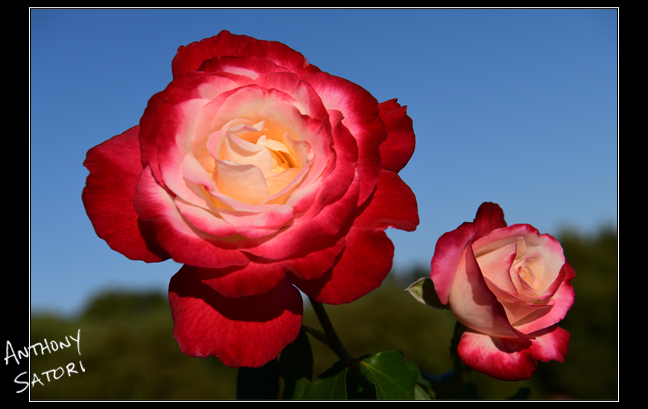
“Double Delight” | Anthony Satori
“It gives you a good feeling. Each year, you rediscover in a garden the magic of life. A flower arrives, and it is a miracle. The leaves fall in the autumn, and it looks fantastic. There is a tenderness about a garden, and you can’t help but be sensitive to that.”
– Hubert de Givenchy
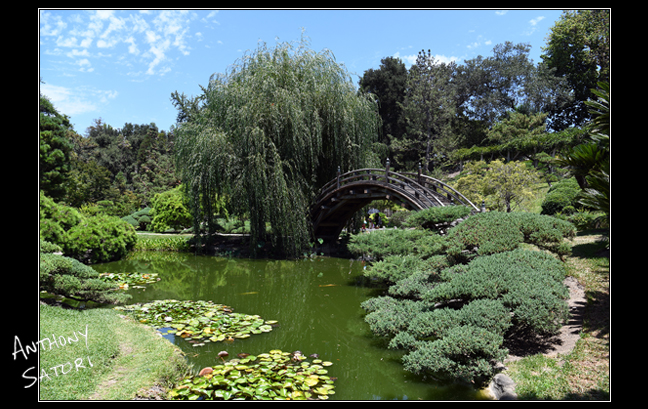
“Lotus Garden” | Anthony Satori
“The goal of life is to make your heartbeat match the beat of the universe, to match your nature with nature.”
– Joseph Campbell
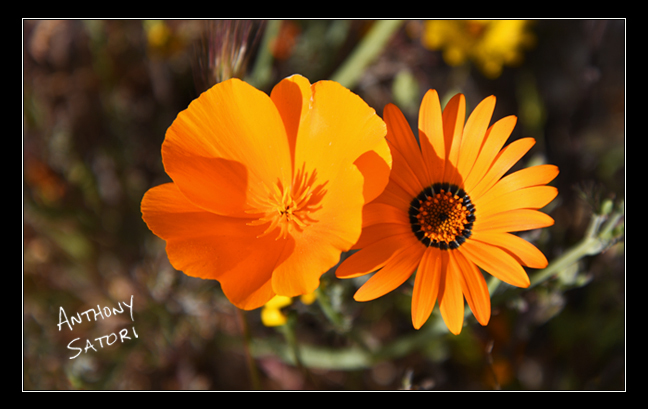
“Vibrance” | Anthony Satori
“I found I could say things with colors and shapes that I couldn’t say any other way; things I had no words for.”
– Georgia O’Keeffe
 Satori Circle | Art & Culture