“The Enigmatic Phenomenon of Clowns” | Anthony Satori
Clowns are such oddly polarizing figures. Some people love them, with deep affection. Others dislike them, with equal intensity. Many people are even afraid of them. But almost everyone has a strong reaction to clowns, one way or another.
Clowns are something of a paradox, as well, in that they deliberately hide their identities beneath layers of paint and outlandish costumes, and yet they lay themselves bare before us by means of their exaggerated gestures, movements, and facial expressions. They throw themselves wholeheartedly into absurd and even dangerous situations in an earnest attempt to make us laugh, gasp, and feel something. We root for them, we fear for them, and we sigh in relief when they escape unscathed.
Every move a clown makes is an effort to capture and hold our attention – to gain our sympathy, to draw our empathy – to be seen and understood by us. And in a way, this makes them a true mirror of the human condition. Perhaps this is why audiences react to clowns in such an intense manner. Maybe their antics hit closer to home than we realize, as we watch these strange, cartoonish figures performing exaggerated and unapologetic presentations of the human need to be seen and appreciated and loved.
And when they cry, it manifests in such an over-wrought caricature of emotion that it can often make us feel uncomfortable. The dissonance of their tears is heightened even further by being juxtaposed with such lighthearted and colorful facades. These are the axiomatic “tears of a clown.” They are expressions of sadness coming from a face with a painted-on smile, and we feel these tears in a uniquely poignant way. Maybe we see something of ourselves in this, as well: the act of wearing a face that says, “everything is alright,” while inside we may be feeling sad, lost, or even depressed.
Upon reflection, it seems that clowns may be a more apt representation of humanity than we might have ever imagined.
A “therianthrope” is a creature or entity which is part animal, part human. In some traditions, therianthropes are even thought to be able to move between their animal and human states fluidly, thus being capable of calling upon their heightened powers at will.
“Apotheosis” is the elevation of something or someone from a secular status to the level of a god. It can also mean when an object or a person achieves the culmination of their potential.
It is surely no coincidence that we often name our brands of automobile – some of our most powerful modern tools – after animals. From Jaguar to Pantera to Mustang, we identify these intensely personal and empowering machines with the names and images of some of the most natively powerful creatures that we can conjure, and then we drive them as if they were an extension of our own human selves. While driving, we very often come to identify completely with our vehicles, and by doing so, it is almost as if we are becoming like gods, or demi-gods, experiencing an elevation of our individual powers by extension. When we join with the spirit of a powerful animal in this way, to some degree we may be experiencing, somewhere deep in our psyche, even in our subconscious mind, something resembling a truly therianthropic apotheosis.
This concept becomes especially interesting when we consider how far back in history – even pre-history – the human race has been irresistibly drawn to the idea of therianthropy. Images and stories of part human/part animal entities – most often accompanied by a considerable elevation in prowess, even the attainment of god-like status – pervades the mythology of virtually every culture on earth. From the majestic centaurs of Greek mythology, to the alluring mermaids of ancient mariners, to the bird-gods of Native American cultures, to the formidable Minotaur destroying everyone who dared venture into his Athenian labyrinth (until he was finally killed by Theseus), hybrid human/animal creatures have populated our conceptual landscape for millennia. Even in our modern age, phantasms such as vampires and werewolves – with all of their attendant superhuman abilities – follow this same pattern.
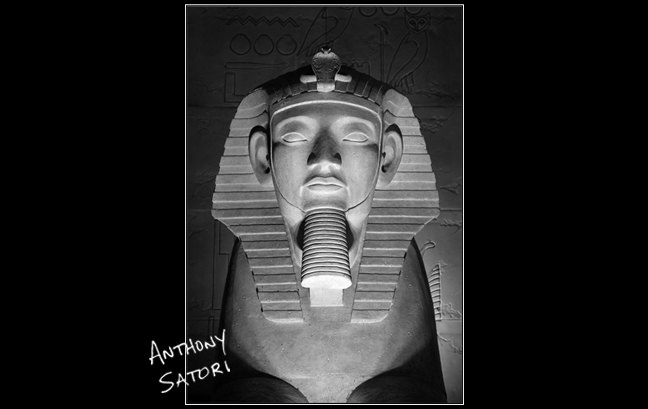
What is particularly striking, however, is the fact that therianthropic ideations date back even further than the ancient Greeks (circa 800 BC). Similar images stretch back a mind-boggling 5,000+ years to ancient Egypt, as exemplified by the god Anubis who had the body of a man and the head of a jackal, or the Sphinx which combines distinctly human features with powerful feline attributes.
Even more remarkable, therianthropic images reach even further back than this, upwards of an astounding 40,000+ years in the cave paintings of Europe. In fact, the very earliest of mankind’s visual expressions – that is, the very first subjects humans considered important enough to capture in representative artworks – portray a remarkably rich array of unmistakably therianthropic creatures, painted directly alongside entirely realistic representations of animals which lived at the time. From the very beginning, mankind has been depicting therianthropes, and such representations continue to show up, unabated, for the entirety of the thread of human artistic and mythological expression, all the way up to the present moment. It is clear that we have been dreaming of such metamorphoses – and the accompanying apotheoses – since the beginning of human imagination. Is it any wonder, then, that we would reach for such elevations in our use of modern technology? How could we not attempt to use our power of innovation to create extensions and elevations of our mortal being, when we have been imagining such hybrid existences since the beginning of time?
Or maybe – just maybe – such images were not mere figments of our imagination, at all, but were actually attempts to preserve a hazy and almost-forgotten past. Were the ancient cave painters perhaps actually depicting something real in their experience or recent memory? Does the veil of human pre-history hide a vastly more fantastic story of this planet than we could ever imagine? Did actual therianthropes roam the earth, and were these ancient depictions and mythologies actually realistic depictions of a world both fantastic and utterly familiar to these early artists and storytellers?
It is clear that deep echoes of such concepts resonate powerfully in our human minds. It is up to us to decide, then, in the face of such universality, if such ideations are purely products of our imagination, or if they are rather our collective consciousness trying to connect us with some deeper recollections of a mysterious, yet very real, past.
“Every time that someone has, with a pure heart, called upon Osiris, Dionysus, Buddha, the Tao, etc., the Son of God has answered them by sending the Holy Spirit. And the Holy Spirit has acted upon their soul, not by inciting them to abandon their religious tradition, but by bestowing upon them light.”
“Life is a song – sing it. Life is a game – play it. Life is a challenge – meet it. Life is a dream – realize it. Life is a sacrifice – offer it. Life is love – enjoy it.”
“Music has always been a matter of Energy to me, a question of Fuel. Some people call it Inspiration, but what they really mean is Fuel. I have always needed Fuel. I am a serious consumer. On some nights I still believe that a car with the gas needle on empty can run about fifty more miles if you have the right music playing very loudly on the radio.”
— Hunter S. Thompson
The music of the conch shell, for many cultures, has for millennia been the means for calling together the community for celebration, ritual, or a collective endeavor of some kind. For other cultures, it has represented a musical entreaty to communicate with the supernatural world. And for other cultures still, the conch produces nothing less than the sound from which the very universe was created.
“As we grow in our consciousness, there will be more compassion and more love, and then the barriers between people, between religions, between nations will begin to fall.”
“Isn’t it astonishing that all these secrets [of nature] have been preserved for so many years just so we could discover them?”
— Orville Wright, co-inventor of the first airplane. (1903)
Nature holds so many wonderful mysteries. It’s like a giant cosmic Easter Egg hunt that has been carefully set in place for us to enjoy, and I picture a benevolent Creator just sitting back and watching, with pleasure and pride, as we seek — and gradually discover — the endless gifts and surprises that have been hidden for us throughout nature, around the universe, and even within our own souls.
Historical Note: This week marks the 50th anniversary of the Apollo 11 mission, which sent two American astronauts to walk on the moon for the first time in human history. Just this week, as well, a brand new mission has been announced by NASA, scheduled to return humans to the moon by 2024. This new mission is called Artemis. In Greek mythology, Artemis is the godess of wilderness, exploration, archery, and the moon. She is also the twin sister of Apollo.
“My dwelling was small, and I could hardly entertain an echo in it; but it seemed larger for being a single apartment and remote from neighbors.”
“Walden House II (Interior)” | Anthony Satori
“All the attractions of a house were concentrated in one room; it was kitchen, chamber, parlor, and keeping-room; and whatever satisfaction [one may] derive from living in a house, I enjoyed it all.”
“Walden House III” | Anthony Satori
“The snow had already covered the ground… and surrounded me suddenly with the scenery of winter. I withdrew yet farther into my shell, and endeavored to keep a bright fire both within my house and within my breast.”
— Henry David Thoreau (Walden: Life in the Woods, 1854)






 Satori Circle | Art & Culture