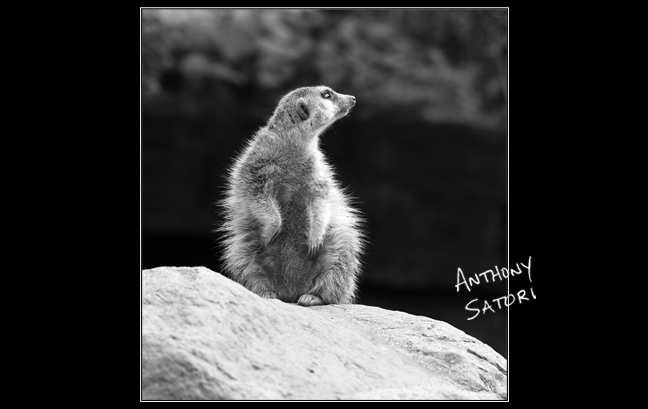
“Meerkat” | Anthony Satori
“Everybody needs beauty as well as bread, places to play in and places to pray in, where nature may heal and give strength to the body and soul.”
– John Muir
“Meerkat” | Anthony Satori
“Everybody needs beauty as well as bread, places to play in and places to pray in, where nature may heal and give strength to the body and soul.”
– John Muir
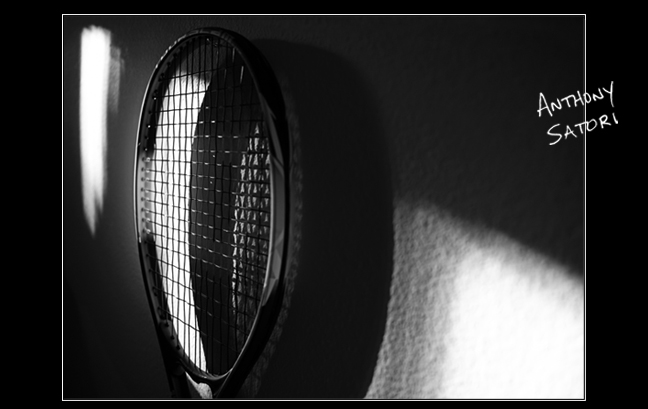
“The Tao of Forms” | Anthony Satori
“When you do not dwell in ego, then things will of themselves reveal their forms to you. Your movement will be like that of water, your stillness like that of a mirror, your responses like those of an echo.”
– Chuang Tzu

“Piano Keys” | Anthony Satori
“I looked. George Shearing. And as always he leaned his blind head on his pale hand, all ears opened like the ears of an elephant. Then they urged him to get up and play. He did. Shearing began to play his chords; they rolled out of the piano in great rich showers, you’d think the man wouldn’t have time to line them up. They rolled and rolled like the sea. He played innumerable choruses with amazing chords that mounted higher and higher till the sweat splashed all over the piano and everybody listened in awe and fright. They led him off the stand after an hour. Shearing rose from the piano, dripping with sweat; these were his great days before he became cool and commercial. He went back to his dark corner, old God Shearing, and the boys said, ‘There ain’t nothing left after that.’ When he was gone, Dean pointed to the empty piano seat. ‘God’s empty chair,’ he said. God was gone; it was the silence of his departure. It was a rainy night. It was the myth of the rainy night.”
– Jack Kerouac
This text is my own compilation of two entirely separate accounts that Jack Kerouac wrote describing a single rainy night when he and “Dean” (Neal Cassady) watched George Shearing play piano at a jazz club. The more I combed through each of the two descriptions, the more I found them to be almost perfectly complimentary to each other. Eventually, it even started to seem as if Kerouac had deliberately structured them this way: consistently presenting certain elements of the experience in one description that he had left out of (or shaded differently in) the other, and vice versa. Being an avid appreciator of Kerouac’s descriptive writing, I became curious to see how the text would feel if I synthesized these two descriptions into one continuous narrative. It started as a creative exercise, but as I proceeded, it almost began to feel as if Jack had quite purposefully left this puzzle to be found and deciphered later by some especially attentive (and lucky) reader, and that I had by pure good fortune stumbled upon this riddle. Whether he did it on purpose or not, I do not know. But the combined story ended up coming together in such a compelling manner, I decided to share it with you here. I hope you enjoy!

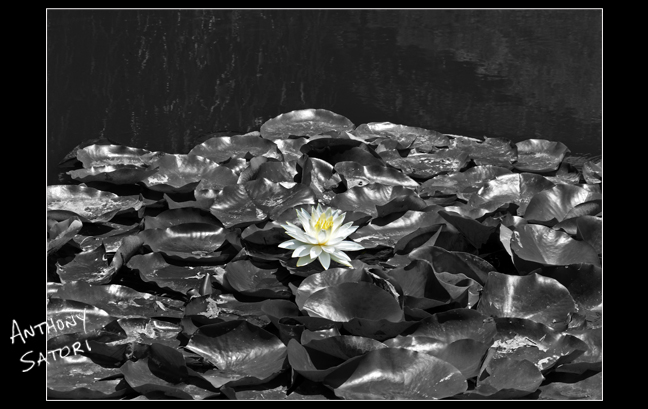
“Sacred Lotus” | Anthony Satori
“When the ground dissolves beneath me, I float.”
– Alan Watts
When I consider this statement by Watts, I place it in what I would call the “present eternal” tense. This is, of course, not an actual grammatical tense in any existing language, as far as I know. But for me, it holds a very special place in the lexicon. It is a way to say, “This is true, right now; but it is also true in a manner that transcends the limitations of time and space.” For example, when we tell someone that we love them, from the depth of our heart, I believe that we are speaking in the “present eternal” tense. This is because true Love exists outside of the limits of time and space. Similarly, when God told Moses that His name was, “I AM,” I believe He was indicating that He, in the same way, inhabits this transcendent, eternal realm.
Now, let us consider the sacred lotus. Its roots are sunk deeply into the earth, anchored firmly in the loamy mud at the bottom of a lake, pond, or slow-moving river. The lotus flower derives stability and nourishment from the depth of its roots, and yet its blossom lives far above this stratum, perched weightlessly and elegantly on top of the water. There it lives, peacefully aloft, supported by a bed of leaves, suspended effortlessly above all of the darkness, dirt, and tumult swirling below. When the ground dissolves beneath it, it floats. This is the lotus blossom’s sacred nature, now and always. It was created to live in the sunlight, to transcend the darkness of the water below, just like we are.
The lotus flower also has the rare ability – an ability usually reserved exclusively for animals – to produce its own heat. Consequently, it can regulate its own interior temperature and thereby moderate its own internal state of being in response to, even in direct contrast to, its environment. In addition to this, a dormant lotus seed can remain viable for hundreds of years, with some documented cases of dormant seeds over even 1000 years old re-awakening and successfully flowering. It doesn’t take much to see why this wondrous flower has been a source of fascination and inspiration – as well as a mystical symbol of transcendence and longevity – for artists, poets, and spiritualists alike.
So, the next time you feel stuck in the mud, exhausted by the murky tumult that swirls all around you, remember: you are a sacred lotus. When the ground dissolves beneath you, float. This is your sacred nature, now and always.
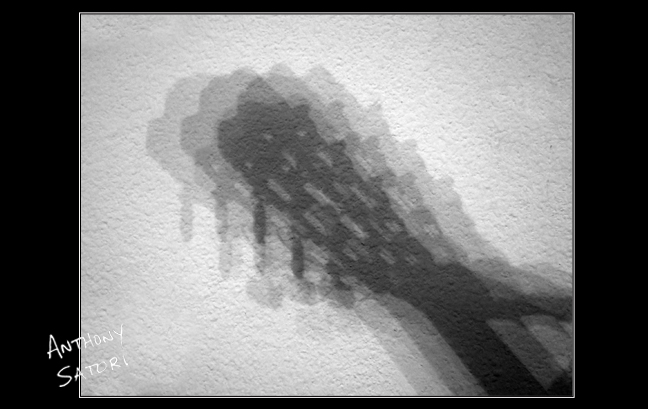
“Music in the Soul” | Anthony Satori
“Music in the soul can be heard by the Universe.”
– Lao Tzu
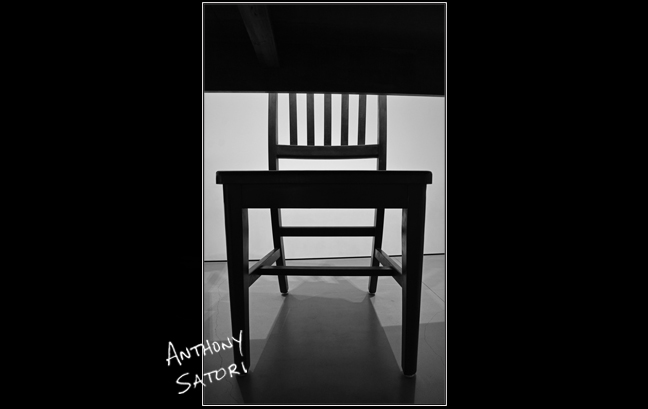
“Chair” | Anthony Satori
It is quite mystical, really, how something physical – a place, a type of flower, an inanimate object; even a color, a sound, a flavor, or a scent – can become so full of meaning and beauty, merely from having accompanied a moment in your life when you felt great joy.
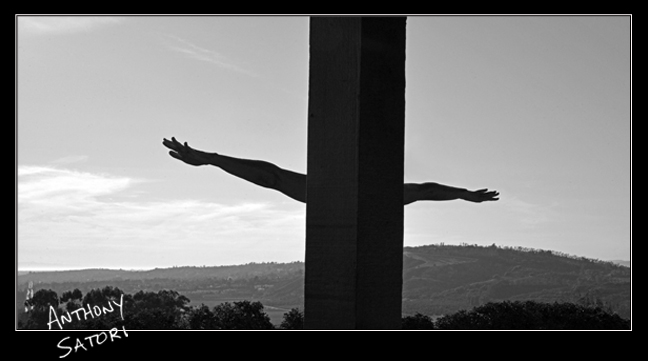
“Take Flight” | Anthony Satori
The fact is, life is a great mystery. None of us knows how long we have here. We may, by some miracle, still be around a hundred years from now. Or we may be gone next week. No one knows. So I say, live lightly. Glide as smoothly as you can over the bumps and dips of this world – they really don’t matter in the big scheme of things. Embrace each day as the gift that it is. Live love, live joy, and live kindness. Live compassion, live gratitude, and live courage. Watch, listen, and learn with humility. Think, speak, and act with intention. And then, when the stars align and the wind is at your back, be ready to fly when the universe presents you with the opportunity to fly.
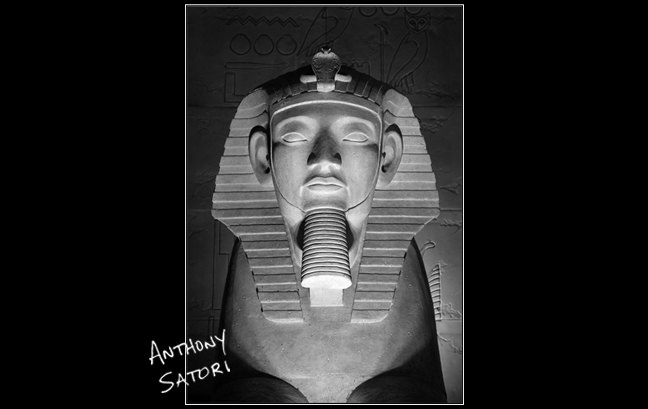
“Sphinx (with Cobra Adornment)” | Anthony Satori
A “therianthrope” is a creature or entity which is part animal, part human. In some traditions, therianthropes are even thought to be able to move between their animal and human states fluidly, thus being capable of calling upon their heightened powers at will.
“Apotheosis” is the elevation of something or someone from a secular status to the level of a god. It can also mean when an object or a person achieves the culmination of their potential.
It is surely no coincidence that we often name our brands of automobile – some of our most powerful modern tools – after animals. From Jaguar to Pantera to Mustang, we identify these intensely personal and empowering machines with the names and images of some of the most natively powerful creatures that we can conjure, and then we drive them as if they were an extension of our own human selves. While driving, we very often come to identify completely with our vehicles, and by doing so, it is almost as if we are becoming like gods, or demi-gods, experiencing an elevation of our individual powers by extension. When we join with the spirit of a powerful animal in this way, to some degree we may be experiencing, somewhere deep in our psyche, even in our subconscious mind, something resembling a truly therianthropic apotheosis.
This concept becomes especially interesting when we consider how far back in history – even pre-history – the human race has been irresistibly drawn to the idea of therianthropy. Images and stories of part human/part animal entities – most often accompanied by a considerable elevation in prowess, even the attainment of god-like status – pervades the mythology of virtually every culture on earth. From the majestic centaurs of Greek mythology, to the alluring mermaids of ancient mariners, to the bird-gods of Native American cultures, to the formidable Minotaur destroying everyone who dared venture into his Athenian labyrinth (until he was finally killed by Theseus), hybrid human/animal creatures have populated our conceptual landscape for millennia. Even in our modern age, phantasms such as vampires and werewolves – with all of their attendant superhuman abilities – follow this same pattern.
What is particularly striking, however, is the fact that therianthropic ideations date back even further than the ancient Greeks (circa 800 BC). Similar images stretch back a mind-boggling 5,000+ years to ancient Egypt, as exemplified by the god Anubis who had the body of a man and the head of a jackal, or the Sphinx which combines distinctly human features with powerful feline attributes.
Even more remarkable, therianthropic images reach even further back than this, upwards of an astounding 40,000+ years in the cave paintings of Europe. In fact, the very earliest of mankind’s visual expressions – that is, the very first subjects humans considered important enough to capture in representative artworks – portray a remarkably rich array of unmistakably therianthropic creatures, painted directly alongside entirely realistic representations of animals which lived at the time. From the very beginning, mankind has been depicting therianthropes, and such representations continue to show up, unabated, for the entirety of the thread of human artistic and mythological expression, all the way up to the present moment. It is clear that we have been dreaming of such metamorphoses – and the accompanying apotheoses – since the beginning of human imagination. Is it any wonder, then, that we would reach for such elevations in our use of modern technology? How could we not attempt to use our power of innovation to create extensions and elevations of our mortal being, when we have been imagining such hybrid existences since the beginning of time?
Or maybe – just maybe – such images were not mere figments of our imagination, at all, but were actually attempts to preserve a hazy and almost-forgotten past. Were the ancient cave painters perhaps actually depicting something real in their experience or recent memory? Does the veil of human pre-history hide a vastly more fantastic story of this planet than we could ever imagine? Did actual therianthropes roam the earth, and were these ancient depictions and mythologies actually realistic depictions of a world both fantastic and utterly familiar to these early artists and storytellers?
It is clear that deep echoes of such concepts resonate powerfully in our human minds. It is up to us to decide, then, in the face of such universality, if such ideations are purely products of our imagination, or if they are rather our collective consciousness trying to connect us with some deeper recollections of a mysterious, yet very real, past.
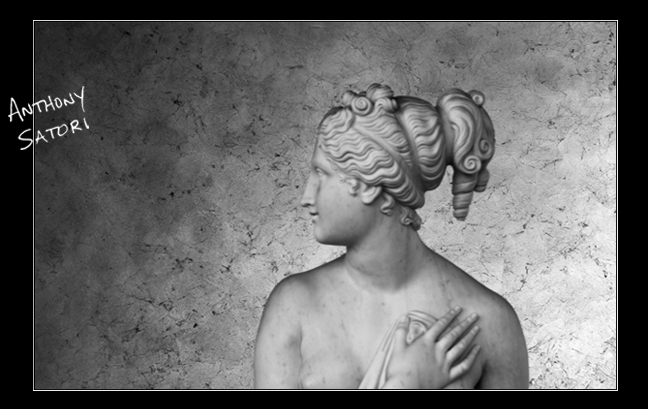
“Shy Venus” | Anthony Satori
“What’s wrong is not a problem with the great discoveries of science. Information is always better than ignorance, no matter what information or what ignorance. What is wrong is the belief behind the information, the belief that information will change the world. It won’t. Information without human understanding is like an answer without its question: meaningless. And human understanding is only possible through the arts and humanities. It is the work of art that creates the human perspective in which information turns to truth.”
– Archibald MacLeish
One of the most startling revelations of quantum physics over the last century has been the assertion that, at the most fundamental levels of existence, there are virtually no inexorable truths or inherent meanings – just pure energy. Put another way: the closer we get to the subatomic realm, the more we discover that the cosmos seems to be made up entirely of nothing more than field equations and mathematical probabilities. All of the numbers, all of the wave functions, all of the raw data – all that they actually seem to be doing is merely suggesting or indicating a probability that some or other discrete particle, phenomenon, or event will occur at some particular point in time and space. Beyond this, there is, arguably, essentially nothing – that is, no “thing” – or perhaps more accurately, some varying probability of “everything.”
It seems that it is only when a conscious mind observes a particular particle or phenomenon that it becomes – almost mystically – transformed from a probabilistic wave function into something that is truly unique, measurable, and discrete. Conscious awareness alone, then, seems to be the singular mechanism in the universe which has the power to transform pure energy into something which has substance, meaning, and truth. And it is the arts and humanities – encompassing, in my view, acts of creativity, kindness, and love, and experiences of transcendence, enlightenment, and spiritual revelation – which, at their best, connect us most directly with this higher consciousness in our human nature, and thereby empower us to become the most effective co-creators of our own universe.
Let us then strive to use these profound gifts mindfully, compassionately, nobly, and constructively. Let us endeavor to make this the best of all possible worlds.
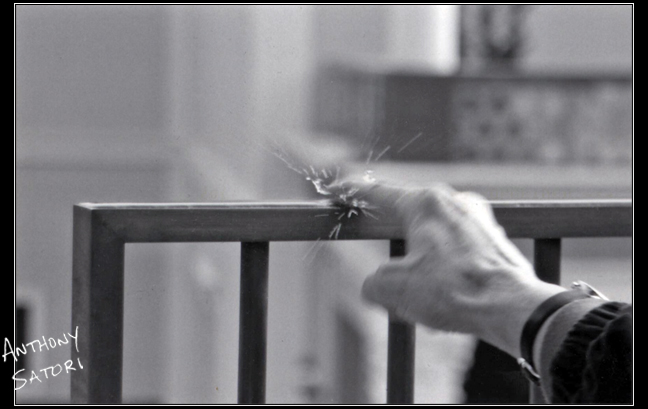
“Splash” | Anthony Satori
“I don’t believe people are looking for the meaning of life as much as they are looking for the experience of being alive.”
– Joseph Campbell
 Satori Circle | Art & Culture