“In dwelling, live close to the ground. In thinking, keep to the simple. In conflict, be fair and generous. In governing, don’t try to control. In work, do what you love. In family life, be completely present.”
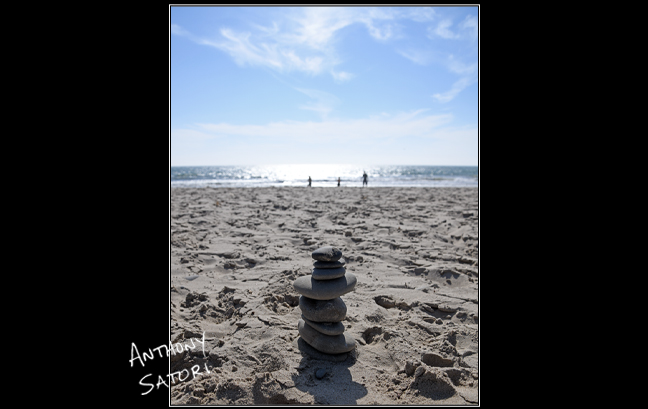
The thing about walking in sand is that you simply cannot rush. Each step takes time. Each step requires attention. You can choose a destination 10, 20, or even 100 feet away, but each step will only take you incrementally closer – slowly, deliberately – and you must make each stride mindfully and with care, so as to keep your balance and to keep yourself moving in the right direction. It is an exercise in patience. It is an exercise in presence. It is an exercise in Zen.
Sometimes you may think, “I will double my effort, triple it, maybe even multiply it five-fold.” But every such increase, even the most emphatic, tends to add at most maybe 5 or 10 percent to your speed – certainly not enough to be worth the additional expenditure of energy, not to mention the attendant elevation of stress, both physical and mental. Therefore, in the end, you eventually discover that your best strategy is merely to take it slow, to expend a reasonable amount of effort with each new step, and to move forward with calm, intention, and purpose – at the pace the sand will allow.
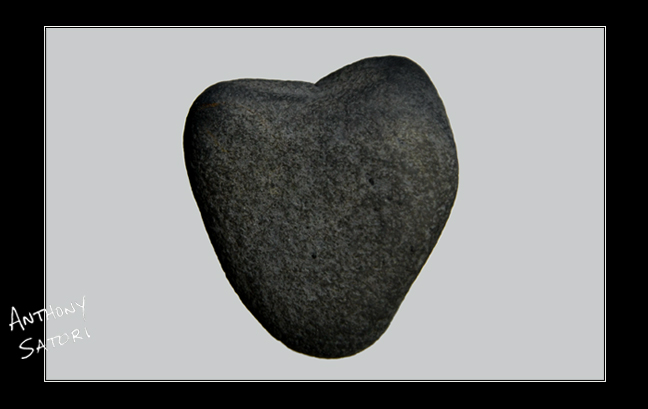
One of the delightful benefits, of course, of walking in sand in such a mindful manner is that sometimes you see things that you might have missed otherwise. Like a rock… shaped like a heart.
“There is pleasure in the pathless woods, there is rapture in the lonely shore, there is society where none intrudes, by the deep sea, and music in its roar; I love not Man the less, but Nature more.”
“Someday, after mastering the winds, the waves, the tides and gravity, we shall harness for God the energies of love, and then, for a second time in the history of the world, man will have discovered fire.”
“A finely tempered nature longs to escape from one’s noisy, cramped surroundings into the silence of the high mountains, where the eye ranges freely through the still, pure air and fondly traces out the restful contours apparently built for eternity.”
“Only those who have cultivated the art of living completely in the present have any use for making plans for the future, for when the plans mature they will be able to enjoy the results.”
“This world is full of conflicts and full of things that cannot be reconciled. But.. when we can transcend.. and reconcile and embrace the whole mess.. that’s what I mean by ‘Hallelujah.'”
“This happiness consisted of nothing else but the harmony of the few things around me with my own existence, a feeling of contentment and well-being that needed no changes and no intensification.”
— Hermann Hesse
A philosophy of simplicity, and the cultivation of inner/outer harmony, these are the sources of true happiness. The contented one knows that happiness is not something “out there” that needs to be chased and pursued, but rather, if one understands and internalizes the principles of simplicity and harmony, everything that is needed for happiness is right here, right now, within reach, right in our own backyard.
This does not, however, mean that the contented one does not appreciate and savor every moment of new experience, of elevated quality, of unique elegance and beauty. In fact, it is quite the opposite. Because the contented one does not need these things to be truly happy, such treasures can be openly welcomed into their world, and the greatest pleasure and value and joy can be derived from them — naturally and purely — when they arrive.
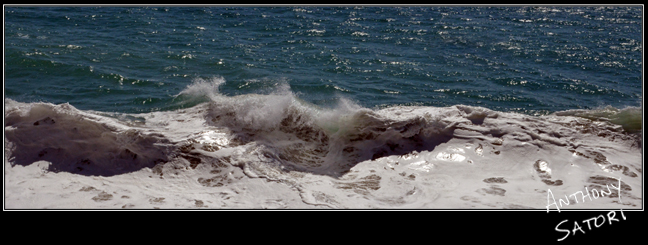
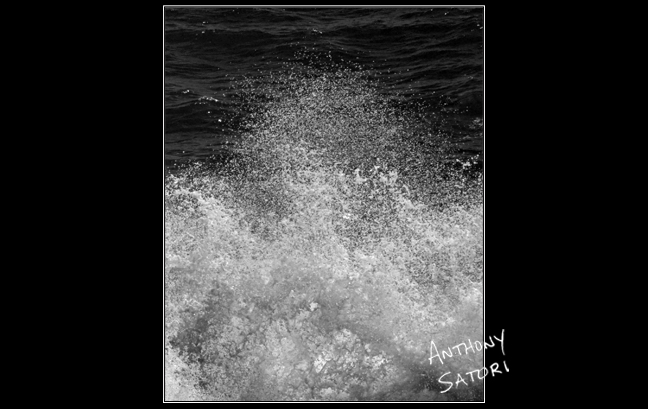
“I felt once more how simple and frugal a thing is happiness: a glass of wine, a roasted chestnut, a scuffed-up little coal-burning heater, the sound of the sea. Nothing else.”



 Satori Circle | Art & Culture